
Book a dental appointment in Dubai and you will likely encounter at least three different terms describing what sounds like the same basic service. Regular cleaning. Scaling. Polishing. Sometimes a clinic uses them interchangeably. Sometimes a patient books what they assume is a routine cleaning and leaves confused about why the invoice mentions scaling separately, or why the appointment took considerably longer than expected.
This confusion is genuinely common, and understanding the real distinctions between these terms matters for more than just clarity. Knowing what each procedure actually involves helps you understand what your specific teeth need, why your dentist recommends one over another, and what to actually expect walking into the appointment. At Premium Cosmetic Laser Center, this is one of the most frequent points of confusion we clarify for patients, so this guide breaks down exactly what separates regular teeth cleaning, scaling, and polishing, and how they fit together as part of one complete visit.
The Short Answer, Before the Full Explanation
Here is the core distinction in a single sentence. Regular teeth cleaning, technically called prophylaxis, is the standard preventive appointment recommended roughly every six months for patients with generally healthy gums, and it actually includes both scaling and polishing as two component steps within that single visit, rather than scaling and polishing being entirely separate, unrelated services. Teeth scaling refers specifically to the step that removes hardened plaque, called tartar or calculus, from the tooth surface and just beneath the gumline, while polishing is the separate, final step that smooths the tooth surface and removes remaining surface stains after scaling is complete.
In other words, for most patients attending a routine, twice-yearly visit, scaling and polishing are not alternatives to regular cleaning. They are the two things that actually happen during a regular cleaning appointment. The confusion tends to arise because dental clinics sometimes bill or describe these steps separately, and because a more intensive procedure, deep cleaning, uses the term scaling as well but refers to something meaningfully different, covered further below.
What Regular Teeth Cleaning Actually Covers
Regular teeth cleaning, or prophylaxis, is the preventive dental visit most people picture when they think of a routine dentist appointment. It is recommended roughly every six months for patients with generally healthy gums and no active signs of gum disease, and it exists specifically to catch and remove buildup before it has the chance to progress into something more serious.
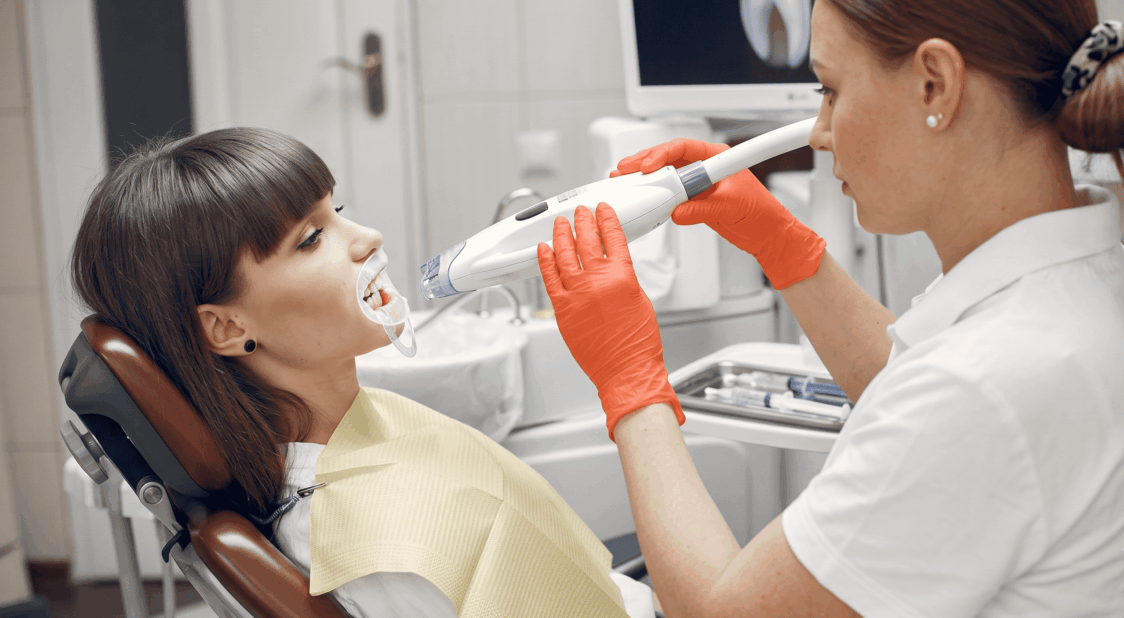
A typical regular cleaning appointment includes a professional dental cleaning as part of preventive dental treatment, with several components performed in sequence. First, an examination, where your dentist or hygienist checks for visible plaque, tartar buildup, early signs of gum inflammation, and any indication of cavities or other developing issues to help catch dental problems early; this routine assessment may also include screening for oral cancer. Next comes scaling, using a small handheld scaler or an ultrasonic scaler to remove plaque and hardened tartar from the tooth surfaces and the area along the gum line. This is followed by flossing between the teeth to clear any remaining debris the scaling instruments could not reach. Finally, dental polishing completes the appointment, and teeth polishing helps remove residual surface stains for a brighter smile and a healthier smile. Many clinics also offer a fluoride treatment at this stage, particularly for patients with a higher risk of cavities.
Professional teeth scaling and polishing often lasts about 30 to 45 minutes, though some visits may run longer and requires no special anesthesia beyond, at most, a topical gel for a particularly sensitive area, since regular cleaning addresses plaque and tartar sitting above the gumline rather than requiring access to deeper tissue. Regular professional cleaning is often covered by UAE insurance plans and can help improve bad breath while reducing the risk of more serious dental issues and future costs.
What Scaling Specifically Refers To
Isolating scaling as its own distinct concept, it refers specifically to the mechanical process of removing hardened plaque, called tartar or dental calculus, from the surfaces of the teeth. Plaque itself is a soft, sticky bacterial film that forms constantly throughout the day, and while proper brushing and flossing help maintain good oral hygiene, once plaque buildup hardens into tartar through saliva’s natural minerals, home care cannot remove it.
Scaling is genuinely necessary because this hardened tartar creates an ideal environment for bacteria to continue accumulating, particularly along and just beneath the gumline, which is why dental scaling matters for preventing gum disease and keeping teeth healthy by removing tartar before it leads to broader dental issues. During scaling, or scaling teeth in plain language, a dentist or hygienist uses an ultrasonic device, which uses rapid vibrations combined with a water spray to gently dislodge tartar, followed by fine hand instruments to refine the cleaning in areas the ultrasonic tool’s tip cannot access as precisely.
It is worth noting that the term scaling gets used in two genuinely different contexts, which is part of why confusion around it persists. Standard scaling, performed as part of a regular cleaning appointment, addresses tartar sitting above the gumline. A more intensive procedure called scaling and root planing, often referred to as deep cleaning, addresses tartar and bacterial buildup that has progressed below the gumline and onto the tooth’s root surfaces, and this version is reserved specifically for patients already showing signs of gum disease, discussed in more detail further below.
What Polishing Specifically Refers To
Polishing is the step that follows scaling, and it serves a genuinely different purpose. Rather than removing hardened tartar, polishing focuses on smoothing the tooth’s surface and removing softer, more superficial surface stains, using a small rotating rubber cup or brush attached to a slow-speed handpiece, along with a mildly abrasive polishing paste; some clinics also offer Air-Flow polishing services, which clean with a jet of air, water, and fine powder particles.
Polishing accomplishes two things worth understanding separately. First, it smooths the enamel surface, which can feel subtly rough at a microscopic level immediately after scaling, since removing hardened tartar sometimes leaves the newly exposed enamel with an uneven texture. A smoother surface genuinely helps keep plaque and bacteria from clinging as easily going forward, contributing to a longer-lasting clean feeling between visits. Second, polishing lifts residual surface staining left behind by everyday habits like coffee, tea, and red wine, which is why many patients notice their teeth looking visibly brighter immediately following a cleaning appointment, and it can also clean hard to reach areas while often being suitable for sensitive teeth and around dental implants.
It is worth being clear about one important distinction here. Polishing removes surface stains and improves appearance and surface smoothness, but it remains a cosmetic step rather than a treatment that directly treats or prevents gum disease the way scaling does, and it is genuinely different from professional teeth whitening, which uses a chemical bleaching agent to actually change the underlying color of the tooth rather than simply removing stains sitting on top of the existing enamel.
Where Regular Cleaning, Scaling, and Polishing Actually Overlap
Bringing these three terms back together, the relationship is straightforward once explained clearly. For the vast majority of patients attending a standard, twice-yearly preventive visit, regular teeth cleaning is the overall appointment, and dental scaling and polishing is the standard professional teeth cleaning most patients receive during that visit, with scaling first to remove hardened buildup and polishing second to smooth and brighten the resulting surface. There is no meaningful distinction between “getting a regular cleaning” and “getting scaling and polishing” for a patient with generally healthy gums, since these terms describe the same standard appointment from slightly different angles.
Confusion tends to arise for two main reasons. Some clinics itemize scaling and polishing as separate line items on an invoice, and many also describe them as separate teeth cleaning services even though both occurred within one visit, which can make it seem like two entirely different services were performed rather than two steps within the same appointment. And separately, the term scaling also applies to the more intensive deep cleaning procedure described next, which genuinely is a different, more involved treatment than what happens during a standard preventive visit.
When Scaling Becomes Something More Intensive: Deep Cleaning
For patients showing signs of gum disease, standard scaling as part of a regular cleaning is not sufficient, and a more involved procedure called scaling and root planing, commonly referred to as deep cleaning, becomes necessary instead. Patients with excessive plaque buildup or active gum concerns may also need this more involved dental procedure rather than a regular cleaning. The key clinical measurement determining which category a patient falls into is gum pocket depth, measured routinely by a hygienist during examination. Pockets measuring around four millimeters or less generally indicate healthy gums suited to standard preventive cleaning. Deeper pockets, or visible signs of gum inflammation and bleeding, typically indicate the need for deep cleaning instead.
Deep cleaning addresses tartar and bacterial buildup that has progressed below the gumline and onto the tooth’s root surfaces, areas a standard cleaning is not designed to reach. It involves two components, scaling to clear plaque and tartar from below the gumline and along the root surfaces, followed by root planing, which smooths the root surface itself to support gum health and give inflamed gum tissue a genuine chance to heal and reattach properly to the tooth, helping prevent tooth loss when disease has advanced below the gumline. Because this procedure reaches below the gumline into more sensitive tissue, local anesthesia is standard, unlike a routine cleaning, which typically requires no numbing at all beyond, at most, a topical gel for a sensitive spot.
Full deep cleaning may require 2 to 4 visits, depending on how much treatment is needed.
Patients requiring deep cleaning also generally need follow-up visits every three to four months rather than the standard six-month interval, and these patients often need frequent cleanings or more frequent cleanings to keep the affected areas properly managed as healing progresses.
Why Understanding These Distinctions Genuinely Matters
Beyond simple curiosity, understanding these differences helps you interpret your own dental visits more clearly and ask better, more informed questions during an appointment. If your dentist recommends scaling and root planing rather than a standard cleaning, understanding that this reflects a genuine clinical finding, deeper gum pockets or active gum inflammation, rather than an upsell, helps you approach the recommendation with the seriousness it actually deserves, since regular scaling and regular dental cleaning are part of protecting long-term dental health, not just cosmetic upkeep. Similarly, understanding that polishing is cosmetic rather than therapeutic clarifies why it will not resolve gum inflammation on its own, and why scaling remains the genuinely necessary step for anyone with visible tartar buildup, regardless of how much they might be tempted to skip straight to a polish for the immediate cosmetic improvement; good oral hygiene and regular preventive visits also help avoid more serious dental problems between appointments.
What to Expect at Premium Cosmetic Laser Center
At Premium Cosmetic Laser Center, our dental clinic ensures every dental cleaning Dubai patients book begins with a proper examination, including a check of gum pocket depth, and patients should choose a facility licensed by the Dubai Health Authority to ensure compliance. An experienced dental team in our dental team uses advanced techniques to decide accurately whether a standard regular cleaning, including scaling and polishing, is appropriate, or whether findings indicate a need for more intensive deep cleaning instead. We explain clearly which category your specific visit falls into and why, so you understand exactly what is happening at each stage of your appointment rather than encountering unfamiliar terminology without context.
Final Thoughts
Regular teeth cleaning, scaling, and polishing are not three competing, separate services to choose between. For most patients, they describe one complete preventive visit, scaling to remove hardened tartar, polishing to smooth and brighten the resulting surface, both performed together as standard components of a routine cleaning appointment recommended roughly every six months. The term scaling becomes more significant, and refers to a genuinely more intensive procedure, only when gum disease is present and a deeper, below-the-gumline treatment is clinically necessary.
Understanding these distinctions helps demystify what can otherwise feel like confusing dental terminology, and helps you approach your next appointment with a clearer sense of what to expect and why. If it has been more than six months since your last cleaning, or you are simply curious which category your specific oral health currently falls into, it is worth scheduling an evaluation and continuing to practice good oral hygiene at home between visits. At Premium Cosmetic Laser Center, our team is happy to walk you through exactly what your teeth and gums need, with the goal of helping you maintain a healthier smile through ongoing dental care.
Frequently Asked Questions
1. Is scaling and polishing the same thing as a regular teeth cleaning?
For most patients with healthy gums, yes. A regular teeth cleaning appointment, technically called prophylaxis, includes both scaling and polishing as its two main procedural steps, scaling to remove hardened tartar and polishing to smooth and brighten the resulting tooth surface, rather than these being entirely separate, alternative services.
2. What is the actual difference between teeth scaling and polishing?
Scaling removes hardened plaque, called tartar, from the tooth surface and along the gum line as part of professional teeth scaling, using an ultrasonic device and fine hand instruments. Polishing is the following step, using a rotating rubber cup and mildly abrasive paste to smooth the tooth’s surface and remove remaining surface stains, improving both texture and appearance rather than addressing tartar buildup directly.
3. Why did my dentist recommend deep cleaning instead of a regular cleaning?
Deep cleaning, also called scaling and root planing, is recommended specifically when gum pocket depth measurements or visible signs of inflammation indicate gum disease is present. It addresses tartar and bacteria that have progressed below the gumline onto the tooth roots, and it is often advised when plaque buildup below the gums threatens overall gum health and may lead to tooth loss if ignored, since these are areas a standard cleaning cannot reach and genuinely require a different, more involved treatment approach than routine preventive scaling and polishing.
4. Does polishing whiten my teeth the same way professional whitening does?
No. Polishing removes surface level staining from substances like coffee and tea, often leaving teeth looking visibly brighter immediately afterward, but it does not chemically change the underlying color of the tooth enamel itself. Professional teeth whitening uses a bleaching agent specifically designed to alter the tooth’s actual shade, which is a genuinely different process than polishing.
5. How often do I need regular cleaning versus deep cleaning?
Patients with healthy gums generally need a regular cleaning, including scaling and polishing, roughly every six months, although some patients need frequent cleanings or more frequent cleanings based on risk factors and clinical findings. Patients who have undergone deep cleaning due to gum disease typically require more frequent follow-up visits, often every three to four months, to properly manage the affected areas as healing progresses.
6. Does scaling hurt, and will I need anesthesia?
Standard scaling performed during a regular cleaning typically does not require anesthesia, at most a topical gel for an especially sensitive spot, and most patients describe it as involving mild pressure or vibration rather than genuine pain. Patients with sensitive teeth may also benefit from gentler techniques depending on the cleaning method used. Deep cleaning, since it reaches below the gumline into more sensitive tissue, commonly involves local anesthesia to keep the patient comfortable throughout the procedure.
