
Focus Keywords: dentist clinic in Dubai, dentistry services in Dubai, routine dental checkup
Ask ten people how often they visit the dentist and you will get ten different answers. Some go every six months without fail. Some go once a year when they remember. Some have not been since a toothache forced them in, and a few cannot recall their last visit at all. Almost everyone shares the same quiet assumption: if nothing hurts, there is probably nothing wrong.
That assumption is exactly why routine dental care exists. Many of the most common dental problems, including early cavities, gum disease, and cracked fillings, cause no pain at the start. By the time they hurt, the treatment needed is usually larger, more involved, and more expensive than it would have been if the problem had been caught earlier. A regular routine dental checkup is the simplest and cheapest way to avoid that outcome.
So how often should you actually go? The honest answer is that the common advice of every six months is a good starting point for most people, but the right interval depends on your own mouth, your habits, and your health. This guide explains the general rule, who needs more frequent visits, what happens during an assessment, and how to choose the right dentist clinic in Dubai for ongoing care. It reflects how we approach preventive care at Premium Cosmetic Laser Center.
The Short Answer: Every Six Months for Most People
For most healthy adults and children, a routine dental checkup and professional cleaning every six months is the standard recommendation. Twice a year is frequent enough to catch problems early, and preventive dentistry commonly includes cleanings, check-ups, and fluoride treatments to remove the plaque and tartar that brushing cannot and keep small issues small, without being burdensome. Fluoride treatments help strengthen teeth and prevent decay.
Six months is not a magic number. It is a practical average that works well for the majority of people. It reflects how quickly plaque hardens into tartar, how fast an early cavity can progress, and how gum disease can develop quietly between visits. But it is a guideline, not a rule, and your dentist may recommend a different schedule once they have assessed your individual risk.
Who May Need More Frequent Visits Due to Gum Disease
Some people benefit from seeing the dentist every three to four months, or on a schedule tailored by their dentist. Your general dentist may shorten the interval based on your individual needs and unique needs rather than using a one-size-fits-all schedule. You may need closer monitoring if any of the following apply.
| Situation | Why more frequent visits help |
| History of gum disease | Gum problems can progress quietly and need regular monitoring and deeper cleaning |
| Frequent cavities | A higher cavity rate calls for closer checks and preventive measures |
| Smoking or tobacco use | Increases risk of gum disease, staining, and oral health problems |
| Diabetes | Can affect gum health and healing, so oral health needs closer attention |
| Pregnancy | Hormonal changes can affect the gums, making checks and cleaning more important |
| Braces or aligners | Appliances make cleaning harder and call for regular monitoring |
| Dry mouth | Reduced saliva raises the risk of decay |
| Dental restorations | Crowns, fillings, and other work should be checked periodically |
| Weakened immune system | Greater vulnerability to oral infections |
If you fall into any of these groups, ask your dentist what schedule makes sense for you. The point of a tailored interval is not to create extra appointments but to stay ahead of the specific risks you carry.
Who Might Need Fewer Visits?
Some adults with excellent oral health, no history of gum disease, very few cavities, and consistently good home care may be advised by their dentist that a longer interval is acceptable. This is a decision for your dentist to make after assessing your history and current condition, not something to assume on your own. Even in low-risk cases, going much longer than a year between visits increases the chance of missing an early problem.
What About Children and Teenagers?
Children should begin dental visits early, typically around the time their first teeth appear and no later than their first birthday, so that the dentist can monitor development and help parents with feeding, cleaning, and habits. In Dubai, pediatric dentistry is a recognized specialist field, which can be especially helpful for younger children or more complex cases. After that, regular checkups, commonly every six months, help detect cavities, monitor how teeth and jaws are developing, and build a positive relationship with the dentist before any problems arise.
Teenagers deserve particular attention. Orthodontic treatment, including orthodontics for crowded or crooked teeth, braces, and Invisalign as a popular option, along with sugary drinks, changing habits, and the eruption of wisdom teeth all make regular checks valuable during these years.
What Happens During a Routine Dental Checkup?
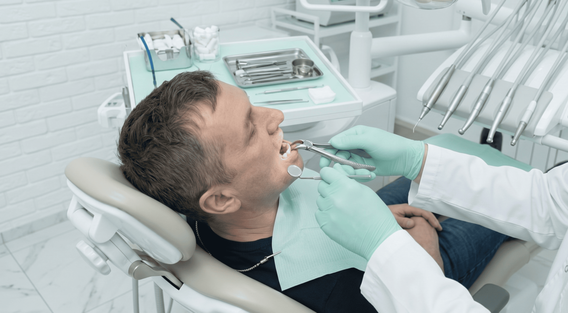
Many people avoid the dentist partly because they do not know what to expect. A routine dental checkup at a dental clinic is usually straightforward and comfortable, and it typically includes the following.
A review of your history. Your dentist asks about your health, medications, habits, and any concerns or symptoms you have noticed since your last visit.
A thorough examination. The dentist checks each tooth for decay, cracks, and wear, looks at existing fillings and restorations, and examines the gums for signs of inflammation or recession.
A check of the soft tissues. This includes the tongue, cheeks, and throat, and serves as a screening for unusual changes that deserve attention.
X-rays when needed. Digital X-rays reveal problems that cannot be seen by eye, such as decay between teeth, bone loss, or infection at the root. They are taken when clinically appropriate rather than automatically at every visit.
Professional cleaning. Scaling removes hardened tartar from the teeth and below the gumline, and polishing smooths the surfaces and removes surface stains. Even people who brush and floss carefully build up tartar in places a toothbrush cannot reach.
Advice and planning. The dentist explains what was found, answers your questions, and recommends any treatment or changes to your home care. Depending on your dental needs, the dentist may also recommend follow-up dental treatments or procedures. If treatment is needed, you should receive a clear explanation and a transparent quote.
For most patients, the entire visit takes under an hour and involves little or no discomfort.
Why Preventive Dentistry Beats Repair
The strongest argument for regular visits is what happens to a small problem left alone. Tooth decay is progressive. It begins in the outer enamel, where it can often be treated with a simple filling or even stopped with preventive measures; at this stage, restorative dentistry can often preserve function with simpler treatment before the damage worsens. Left untreated, it moves into the softer dentin beneath, where it advances faster and begins to cause sensitivity. Eventually it can reach the pulp, the living center of the tooth, at which point the infection can cause severe pain and the tooth may need root canal treatment and a crown, or in some cases extraction.
Gum disease follows a similar pattern. Early gum inflammation, called gingivitis, is reversible with professional cleaning and better home care. Left alone, it can advance to periodontitis, which damages the bone that supports the teeth and can eventually lead to loosening and tooth loss. Gum disease is often painless in its early stages, which is why many people have no idea they have it until a dentist points it out.
Routine visits interrupt both processes early, when treatment is simplest, least invasive, and least costly, helping protect healthy teeth and support good oral health over time. In that sense, a checkup is not an expense but a way of avoiding larger ones.
What to Do Between Visits
Professional care works best alongside good habits at home that support your teeth and healthy gums. Brush twice a day for two minutes with a fluoride toothpaste, using a soft brush and gentle technique, and consult your dentist if you are unsure which toothpaste or home-care products are right for you. Clean between your teeth once a day with floss or interdental brushes, since a brush cannot reach these areas. Limit sugary snacks and drinks and avoid constant sipping on sweet or acidic beverages, which keeps your teeth under repeated attack. Drink water, especially after meals and coffee or tea. Avoid smoking and tobacco. Replace your toothbrush every three months or when the bristles fray. And do not skip your scheduled visits just because your teeth feel fine.
Signs You Should Not Wait for Your Next Checkup
A routine dental checkup is scheduled, but some symptoms mean you should book sooner for expert care rather than waiting for the next checkup. Seek an appointment if you notice persistent toothache or sensitivity to hot or cold, bleeding or swollen gums, a loose or cracked tooth, a lingering bad taste or breath, a bump or swelling on the gum, pain when biting, a lost filling or crown, or any sore or lump in the mouth that does not heal within a couple of weeks; these signs may also mean follow-up care such as gum disease treatment is needed. Swelling of the face with tooth pain needs urgent attention.
Why People Skip Checkups and How to Get Past It
The most common reasons people postpone dental visits are fear or anxiety, lack of time, concern about cost, and the belief that nothing is wrong. Each has a practical answer.
If anxiety is the issue, tell your dentist. Modern dentistry offers gentle techniques, topical numbing, and clear explanation of each step, and a good clinic will work at your pace; a comfortable environment, attention to patient comfort, and friendly staff can also make a big difference for nervous patients. A welcoming environment can help children and anxious adults feel more at ease during visits. If time is the problem, remember that a routine visit is usually short, and that fitting in two predictable appointments a year is far easier than managing an emergency. If cost is the concern, preventive care is the most economical form of dentistry, and it is worth checking what your insurance covers for preventive visits. And if you feel fine, remember that the absence of symptoms is precisely when problems are easiest to fix.
Dubai Lifestyle Factors Worth Considering
Life in Dubai has features that make regular dental care particularly worthwhile. Clinics in Dubai also range from budget and mid-range options to luxury practices. Many residents spend long days in air-conditioned environments and may not drink as much water as they should, which can contribute to a dry mouth. A dry mouth has less saliva to protect the teeth, increasing the risk of decay. Coffee, tea, and sweet drinks are woven into daily life and social gatherings, which affects both staining and cavity risk. Busy schedules make it easy to defer appointments indefinitely. And the city’s mobile, international population means many people lack a regular dentist who knows their history. Many dental professionals in Dubai also hold international certifications from the US and Europe, and multilingual teams are common, which can help patients compare clinics more confidently.
Establishing a relationship with one trusted dentist clinic in Dubai gives you continuity: someone who knows your teeth, tracks changes over time, and can spot developing issues sooner.
How to Choose a Dental Clinic in Dubai
When choosing a dental clinic in Dubai for long-term care, consider the following. Check that the clinic is licensed by the Dubai Health Authority and that its dentists are qualified; many patients also look for expert dentists and specialist providers with over 10 years of experience. Look for a clinic that takes time to examine you properly and explains what it finds in plain language rather than rushing. Ask about the technology used, such as digital X-rays, and whether the clinic invests in advanced technology and the latest technology for earlier, more accurate detection with lower radiation. Check that the clinic is a full service dental clinic that can meet most needs under one roof, including preventive dentistry, cosmetic dentistry, restorative dentistry, oral surgery, and other specialized care such as endodontics and maxillofacial surgery. Look for transparent pricing and clear treatment plans. And pay attention to how comfortable the team makes you feel, because a clinic where you feel at ease is one you will actually return to.
Dentistry Services in Dubai Beyond the Checkup: Teeth Whitening and More
A good routine dental checkup is the foundation, but it often leads naturally to other care. At Premium Cosmetic Laser Center, our dentistry services in Dubai cover general and cosmetic care in one place. These include scaling and polishing, dental fillings, root canal treatment, dental crowns, braces and retainers, teeth whitening, which commonly uses carbamide peroxide to lighten teeth, veneers, bridges, dentures, dental implants, gentle dental extractions, full mouth rehabilitation, and Hollywood Smile makeovers.
Having these services under one roof means that if your checkup reveals a cavity, a worn restoration, or a cosmetic goal you want to pursue, you can discuss it with the same team that already understands your teeth. Dental implants replace the root of a missing tooth and function much like a natural tooth. It also means your treatment can be planned sensibly: preventive and restorative needs first, then cosmetic improvements on a healthy foundation. This kind of comprehensive dental care can cover preventive, cosmetic, and restorative needs under one roof, helping patients work toward a harmonious smile and a more confident smile.
Why Choose Premium Cosmetic Laser Center
At Premium Cosmetic Laser Center, we treat the routine dental checkup as the most valuable appointment in dentistry. As a full-service dental clinic, our DHA-licensed dental team is a skilled team that tailors care to your individual needs and overall well being. We examine your teeth and gums carefully, use digital imaging where it is clinically appropriate, perform professional cleaning, and explain clearly what we find and what, if anything, needs attention. We aim to support your well being through comprehensive dental care in a comfortable, patient-focused setting, and to give you honest advice about how often you personally should return.
If it has been a while since your last visit, there is no judgment here. The best time to book is now, because every month that passes is a month in which a small problem could be growing quietly.
Final Thoughts
The right answer to how often you should visit a dentist is, for most people, twice a year, adjusted up or down according to your own needs. What matters more than the exact interval is the habit itself: showing up regularly, before something hurts, so that small problems stay small.
A routine dental checkup is one of the simplest, quickest, and most cost-effective investments you can make in your health. If you do not have a regular dentist, or it has been too long since your last visit, book an appointment at Premium Cosmetic Laser Center and let our team take a look.
Frequently Asked Questions
- How often should I get a routine dental checkup?
For most healthy adults and children, a routine dental checkup and cleaning every six months is the standard recommendation. Some people, such as those with gum disease, frequent cavities, diabetes, or braces, may need to be seen every three to four months. Your dentist will advise the schedule that suits your own risk level.
- Is it okay to visit the dentist only once a year?
Some low-risk adults may be advised by their dentist that a longer interval is acceptable, but this should be a decision made after an assessment, not an assumption. For most people, going a full year or more between visits increases the chance of missing early decay or gum disease.
- What happens if I only go when I have a problem?
Visiting only when something hurts means problems are usually found later, when they are more advanced and more complicated to treat. Early cavities and gum disease often cause no pain, so waiting for symptoms means missing the stage when treatment is simplest and least expensive.
- When should my child have their first dental visit?
Children should typically have their first dental visit around the time their first teeth appear and no later than their first birthday. Regular checkups after that help monitor development, catch cavities early, and help children feel comfortable at the dentist.
- Does a routine dental checkup include a cleaning?
Yes, in most cases. A routine visit commonly combines an examination with professional scaling and polishing, which removes tartar and surface stains that brushing at home cannot. Your dentist will also review your home care and advise on any improvements.
- What should I look for when choosing a dentist clinic in Dubai?
Look for Dubai Health Authority licensing, qualified dentists, a thorough and unhurried examination, modern diagnostic technology such as digital X-rays, a full range of services, and transparent pricing. Choose a clinic where you feel comfortable, because that makes it far more likely you will keep up regular visits.
Due for a checkup? Book your routine dental assessment at Premium Cosmetic Laser Center today.
