
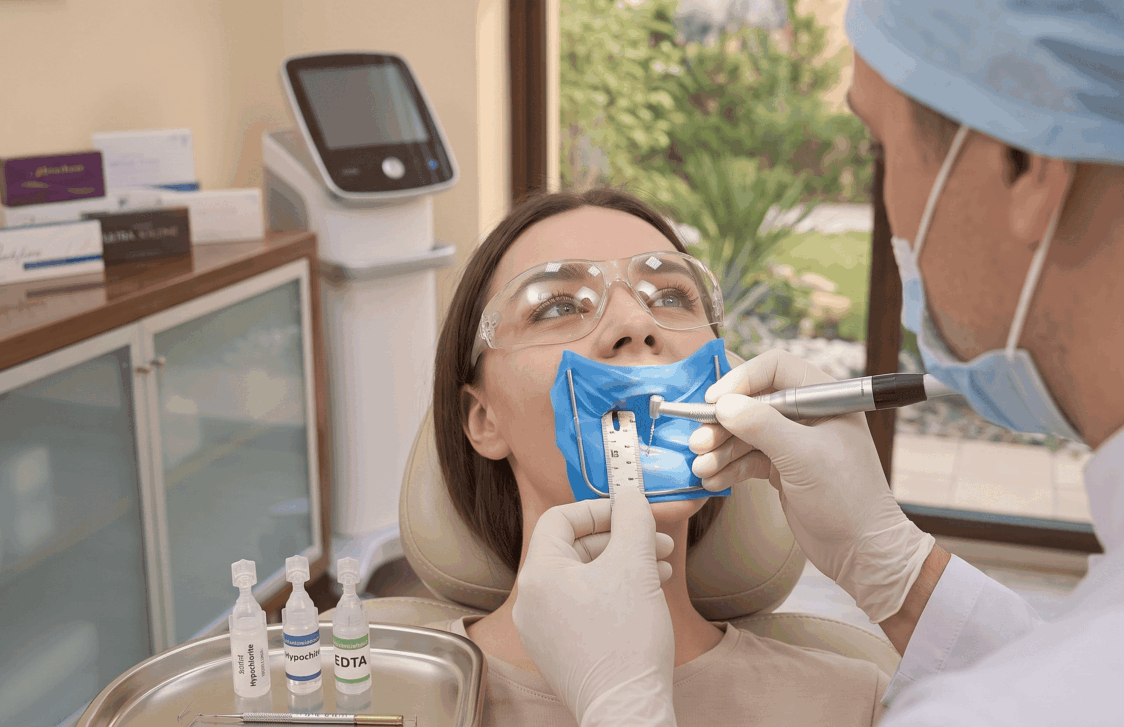
Ask almost anyone about root canals and you will get the same reaction. A wince, a sharp intake of breath, and some variation of “those are supposed to be terrible.” The root canal has become one of the most feared procedures in all of dentistry, used as a cultural shorthand for worst-case scenarios, referenced in jokes and idioms, and dreaded by patients long before they have ever sat in the chair. But here is what most people do not know: a significant portion of what makes root canals so feared has nothing to do with the actual procedure as it exists today.
Much of what passes for common knowledge about root canal pain comes from experiences that are decades old, from outdated techniques, limited anesthesia, and manual instruments that have since been entirely replaced by modern technology. The procedure that terrified patients in the 1980s and 1990s bears almost no resemblance to what root canal treatment in Dubai looks like in 2026. The reputation, however, has outlasted the reality.
At Premium Cosmetic Laser Center, we treat a significant number of patients who have delayed necessary root canal treatment for months or even years because of fear based on things they heard secondhand or read online. In almost every case, these patients tell us afterwards that the procedure was nothing like what they had imagined. This guide exists to address the myths directly, replace them with the current clinical reality, and help you make an informed decision about your oral health rather than an avoidant one driven by outdated information.
Where the Fear Actually Came From
Understanding why root canals carry such a fearsome reputation requires going back to where that reputation originated. Before the widespread adoption of modern local anesthetics and rotary instruments, root canal procedures relied on manual files, less effective numbing agents, and techniques that were genuinely more uncomfortable than what is used today.
Patients who underwent root canal treatment in the 1970s and 1980s sometimes experienced significant discomfort during and after the procedure. These experiences created a cultural memory that was passed down through families and communities long after the technology improved. The horror stories your parents or grandparents told about root canals were based on real experiences, but those experiences reflected a dentistry that no longer exists in any well-equipped modern clinic.
A survey cited by the American Association of Endodontists found that patients who had actually experienced root canal treatment were six times more likely to describe the procedure as painless than patients who had never had one. The fear is significantly worse than the reality, and it is sustained by secondhand stories rather than first-hand modern experience.
Myth 1: Root Canal Treatment Is Extremely Painful
This is the central myth and the one that causes the most harm, because it leads people to delay treatment until a situation that could have been resolved simply becomes genuinely serious. The truth is precisely the opposite of what the myth suggests. Root canal treatment is designed to relieve pain, not cause it.
The root canal pain that most patients actually experience is the pain of the infected or inflamed tooth pulp before the procedure begins. Throbbing toothache, sensitivity to hot and cold, pain when chewing, swelling in the surrounding gum tissue, all of these symptoms come from the infection inside the tooth, not from the treatment. The root canal procedure removes the source of that pain. In most cases, patients experience significant relief within a day or two of treatment as the infection is eliminated.
During the procedure itself, modern local anesthetics produce complete numbness in the treatment area before any work begins. Most patients report feeling pressure during the procedure but not pain. Computer-controlled anesthesia delivery systems used in advanced dental clinics provide faster-onset and longer-lasting numbness than older techniques, and ultra-fine needles make the injection process itself far more comfortable than patients anticipate.
Myth 2: Extraction Is a Better Alternative to a Root Canal
Many patients who fear root canal treatment ask whether extraction is a simpler, easier alternative. It feels more straightforward. Remove the problem tooth and move on. But preserving your natural tooth is almost always the significantly better outcome for your long-term oral health, and extraction typically creates more complexity rather than less.
Natural teeth are stronger and function better than any replacement option. When a tooth is extracted, the neighboring teeth lose their structural support and can begin to drift out of position over time. The bone underneath the extraction site shrinks gradually because there is no tooth root providing stimulation through chewing. This bone loss can become a significant issue if you later choose to replace the extracted tooth with an implant, since adequate bone volume is required for successful implant placement.
The alternatives to a natural tooth, including implants, bridges, and dentures, are all more expensive than root canal treatment in Dubai and require their own maintenance and eventual replacement. Keeping your natural tooth through root canal treatment is generally the most cost-effective, health-preserving outcome available when a tooth can be saved.
Myth 3: Root Canals Take Hours and Require Multiple Visits
Another deeply persistent misconception is that root canal treatment involves a marathon appointment of several hours or a series of visits stretched over weeks. This was closer to the reality of root canal treatment several decades ago when manual instruments required significantly more time and multiple appointments were often necessary to complete the process.
In 2026, most root canal treatments at a well-equipped dental clinic in Dubai are completed in one to two visits, each lasting approximately sixty to ninety minutes. Digital imaging and cone beam computed tomography scans allow the treating dentist to map the exact anatomy of the root canals in three dimensions before beginning treatment, which means less guesswork, fewer surprises during the procedure, and a shorter overall treatment time.
Rotary nickel-titanium instruments, which replaced the manual filing systems of previous decades, clean and shape the root canals far more quickly and consistently than older methods. Laser-assisted disinfection technology thoroughly eliminates bacteria throughout the canal system in a fraction of the time that manual irrigation previously required. The entire treatment experience is significantly shorter and more efficient than the myths surrounding root canal pain would suggest.
Myth 4: You Need to Be in Pain to Need a Root Canal
This myth is not just incorrect. It is actively dangerous. Some teeth that require root canal treatment produce very little or no pain at all, particularly in cases where the nerve has already been significantly damaged or has died. The absence of pain does not mean the absence of infection. It may actually indicate that the infection has progressed to the point where the nerve is no longer functional enough to signal distress.
In these cases, the infection can continue to damage the surrounding bone and tissue silently while the patient feels little discomfort and assumes everything is fine. Without regular dental checkups and X-rays, these situations can deteriorate significantly before they are identified and treated.
This is one of the strongest arguments for regular dental checkups at a trusted dental clinic in Dubai. Digital X-rays and 3D imaging can identify infection, bone loss, and pulpal damage long before symptoms become obvious, allowing for earlier, simpler treatment. Waiting for severe pain before seeking care consistently results in more complex treatment requirements and longer recovery times.
Myth 5: Root Canals Cause Illness or Disease Elsewhere in the Body
This particular myth has experienced a resurgence in recent years through online health communities and alternative health content. The claim that root canal treatment causes systemic disease, cancer, or illness elsewhere in the body is based on research conducted in the 1920s by a dentist named Weston Price, whose methodology has been thoroughly discredited by modern science.
The American Association of Endodontists and every major dental and medical research body have conclusively confirmed there is no valid scientific evidence linking properly performed root canal treatment to cancer, systemic disease, or illness elsewhere in the body. On the contrary, research published in JAMA Otolaryngology found that patients who had received multiple endodontic treatments had a 45 percent reduced risk of cancer compared to those who had not.
Root canal treatment removes infected tissue from inside the tooth and eliminates the bacterial source of infection. Leaving an untreated infection in a tooth is far more likely to create systemic health risks than treating it, since oral infections can spread to surrounding bone and, in severe cases, to other parts of the body.
What Modern Root Canal Treatment in Dubai Actually Involves
Root canal treatment in Dubai at Premium Cosmetic Laser Center involves a precise, multi-step process that is considerably more comfortable and efficient than the outdated version most patients fear.
Your dentist begins with a thorough examination and digital imaging, including 3D scanning where indicated, to fully understand the anatomy of the affected tooth before beginning any treatment. A topical numbing gel is applied to the gum tissue before the local anesthetic injection, making the numbing process itself as comfortable as possible. Once the area is completely numb, the procedure begins.
The diseased pulp tissue is carefully removed from inside the tooth. The root canals are then cleaned, shaped using rotary instruments, and disinfected thoroughly. The canals are sealed with a biocompatible filling material called gutta-percha to prevent bacterial reentry. In most cases, a crown is placed over the treated tooth at a subsequent appointment to restore its full strength and function.
Signs You May Need Root Canal Treatment
Knowing what to look for helps you seek treatment early when the procedure is simplest and the outcome is best. Common signs that may indicate the need for Dubai root canal treatment include persistent toothache or spontaneous pain, sensitivity to hot or cold temperatures that lingers after the stimulus is removed, pain when biting or chewing on a specific tooth, swelling or tenderness in the gums near a particular tooth, a tooth that has darkened noticeably compared to surrounding teeth, and a small pimple-like bump on the gum near the affected tooth.
If you are experiencing any of these symptoms, booking an appointment at a trusted dental clinic in Dubai as soon as possible gives you the best chance of a straightforward, comfortable resolution.
Why Choose Premium Cosmetic Laser Center for Root Canal Treatment in Dubai
At Premium Cosmetic Laser Center, our dental team approaches every root canal treatment in Dubai with the advanced technology and patient-centered care that makes the modern procedure as far removed from its fearsome reputation as possible. We use digital imaging, rotary instrumentation, and thorough disinfection protocols to deliver efficient, comfortable treatment with predictable outcomes.
We also understand that dental anxiety is real and take it seriously. Our team takes the time to explain every step of the procedure before it begins, answer every question honestly, and ensure you are completely comfortable before any treatment starts. Many patients who have been avoiding necessary root canal treatment for months tell us afterwards that they wished they had come sooner.
If you have been putting off root canal treatment in Dubai because of fear based on what you have heard, we invite you to come in for a consultation and find out what the procedure actually looks like today.
Final Thoughts
Root canal pain is a myth in its modern form. The procedure that most people fear belongs to a version of dentistry that no longer exists at well-equipped clinics. Root canal treatment in Dubai today is comfortable, efficient, and relieves the infection-driven pain that is making patients genuinely miserable long before they walk through the door.
If you have been delaying root canal treatment because of fear, the most important thing you can do for your oral health is to come in for a consultation and find out what the procedure actually involves in 2026. The reality is significantly better than the reputation suggests.
Frequently Asked Questions
- Is root canal pain during the procedure normal?
No, significant pain during a root canal procedure is not normal with modern anesthesia. If a patient feels pain rather than pressure during treatment, the dentist can apply additional anesthetic immediately. Most patients describe the experience as similar to having a filling placed.
- How long does a Dubai root canal treatment take?
Most root canal treatments at a well-equipped dental clinic in Dubai are completed in one to two appointments of approximately sixty to ninety minutes each. Complex cases involving multiple canals or significant infection may require a second visit, but lengthy multi-session treatments are no longer the norm with modern technology.
- How long does it take to recover from root canal treatment?
Most patients experience mild tenderness for one to three days following treatment, managed comfortably with over-the-counter pain relief. The majority of patients return to normal daily activities the same day or the following day. The prolonged recovery associated with older root canal techniques is not characteristic of modern treatment.
- Is it possible to need a root canal with no pain?
Yes. Some teeth that require root canal treatment produce little or no pain, particularly when the nerve has been significantly damaged. This is why regular dental checkups and X-rays are important. Infection can be identified and treated before pain becomes severe or the situation deteriorates.
- Can I take antibiotics instead of having a root canal?
No. Antibiotics can temporarily reduce the symptoms of a dental infection but cannot reach the bacteria protected inside the tooth’s root canal system. Once the antibiotics course ends, the infection returns. The only effective treatment for infected pulp tissue is its physical removal through root canal treatment.
- Will I need a crown after root canal treatment in Dubai?
In most cases, yes. After root canal treatment, the tooth becomes more brittle since it is no longer receiving nutrients through the pulp. A crown protects the treated tooth from fracturing under normal chewing forces and restores its full function and appearance. Your dentist will discuss the crown placement timeline as part of your overall treatment plan.
Book a consultation at Premium Cosmetic Laser Center today and take the first step toward pain-free oral health with root canal treatment in Dubai that is as comfortable and efficient as modern dentistry can make it.
