
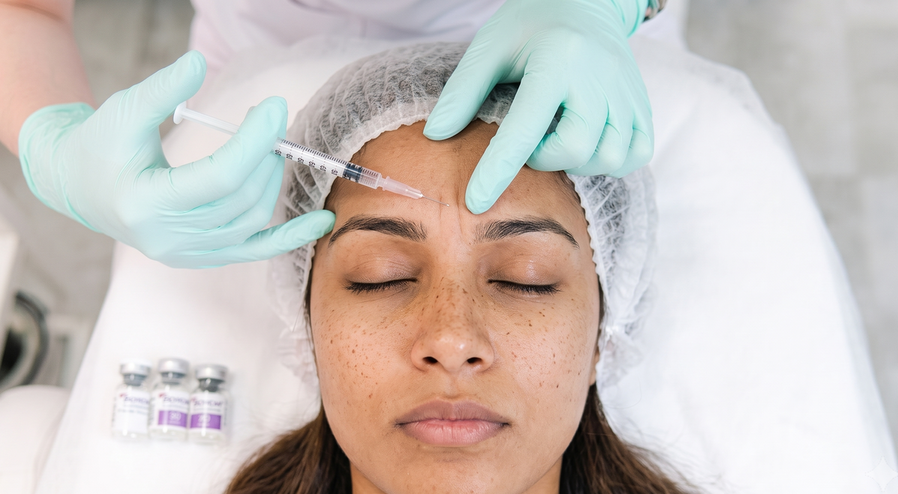
A few years ago, the typical Botox patient walking into a Dubai clinic was in their late thirties or forties, usually looking to soften lines that had already settled into their skin. That is no longer the full picture. Increasingly, the patients booking consultations for Botox treatment in Dubai are in their mid to late twenties, and they are not there to fix anything. They are there to stop something from starting.
This shift is not unique to Dubai, but it is playing out here with particular intensity, driven by a climate, a culture of early self-care investment, and a generation of patients who grew up watching their parents treat wrinkles reactively and decided they wanted a different approach. At Premium Cosmetic Laser Center, we have watched this shift closely, and it is worth explaining properly, because preventative Botox is genuinely different from the corrective treatment most people still associate with the word Botox.
What Preventative Botox Actually Means
Traditional Botox is corrective. It is used to soften wrinkles and lines that have already become visible, often lines that remain etched into the skin even when the face is completely relaxed. Preventative Botox works on an entirely different timeline. It targets the small, repeated muscle movements, frowning, squinting, raising the eyebrows, before those movements have had years to carve permanent creases into the skin.
To understand why this matters, it helps to understand how wrinkles actually form. Every time you make a facial expression, the underlying muscles contract and the skin folds along the same lines. In your twenties, these are called dynamic wrinkles, meaning they only appear while you are actively making the expression and disappear the moment your face relaxes. Over years of repetition, combined with the natural slowdown in collagen and elastin production that begins around the late twenties, those same fold lines gradually stop disappearing. They become static wrinkles, visible even when your face is completely at rest. Once a wrinkle has fully transitioned to static, it becomes significantly harder to treat, and results are rarely quite as complete as skin that was protected earlier.
Preventative Botox works by gently relaxing the specific muscles responsible for these repeated folds, before the fold becomes permanent. The skin overlying a relaxed muscle simply does not crease in the same way, which means the wrinkle never gets the repeated mechanical stress needed to become etched into the collagen structure underneath.
Why the Late Twenties Specifically
Most dermatologists and aesthetic providers now point to the late twenties through early thirties as the practical starting window for preventative treatment, and there is a clear physiological reason behind that timing rather than it simply being a marketing trend.
Collagen and elastin production, the proteins responsible for skin’s firmness and elasticity, begin a gradual, measurable decline starting in the late twenties. This is also typically the age range where expression lines start showing the first signs of lingering slightly longer after the face relaxes, rather than disappearing instantly. In other words, the late twenties is often the exact window where dynamic wrinkles are beginning their slow transition toward becoming static ones, which makes it the most efficient point to intervene.
Starting too early, in the early twenties for most patients, typically offers limited additional benefit, since there are usually no lingering lines yet to prevent from setting. Starting significantly later, once static wrinkles are already well established, shifts the treatment from prevention into correction, which is still effective but works differently and often requires more product and more frequent visits to achieve a comparable result.
This does not mean every twenty-something needs preventative Botox. Age alone is not the deciding factor. Certain lifestyle and genetic factors make earlier treatment more logical for some patients than others.
Who Actually Benefits Most From Starting Early
A handful of clear indicators tend to signal that someone may be a good candidate for preventative Botox treatment in Dubai earlier rather than later.
Highly expressive faces are one of the strongest indicators. People who are naturally animated in conversation, whose eyebrows, forehead, and eye area move noticeably when they talk, laugh, or react, tend to develop dynamic lines earlier and more deeply than less expressive faces, simply because the underlying muscles are working harder and more often.
Family history plays a meaningful role too. Genetics significantly influence how quickly dynamic lines progress into static wrinkles, so patients whose parents developed visible forehead or frown lines relatively early often see similar patterns in themselves, sometimes even earlier given additional environmental factors.
Dubai’s climate makes sun exposure history particularly relevant here. Fair skin types, which have less natural melanin protection and a thinner dermal layer, are more susceptible to both UV damage and mechanical aging, and high sun exposure over years accelerates the exact collagen breakdown that turns dynamic lines into permanent ones. Given how much time many Dubai residents spend outdoors, at the beach, by the pool, or simply commuting under intense year round sun, this factor deserves more attention locally than it might in a cooler climate.
Perhaps the clearest personal signal is noticing faint lines that are beginning to remain visible even when your face is fully relaxed, particularly between the brows or across the forehead. If you catch yourself checking a mirror and seeing a faint line persist for a beat longer than it used to before smoothing out, that is a genuine signal worth discussing with a qualified provider, regardless of your exact age.
The Dubai-Specific Factors Driving This Trend
A few things about Dubai specifically help explain why this shift toward earlier treatment has been particularly visible here compared to many other markets.
The climate is a genuine, physiological factor rather than just a lifestyle detail. Consistent, intense sun exposure across most of the year accelerates the exact collagen and elastin breakdown that drives the transition from dynamic to static wrinkles, which means the biological argument for starting earlier is measurably stronger in Dubai than in climates with more moderate, seasonal sun exposure.
Dubai’s culture around proactive self-investment also plays a role. Skincare routines, regular facials, sun protection, and general aesthetic maintenance are already a normal, unremarkable part of daily life for a large share of the city’s population, particularly among younger professionals. Preventative Botox has increasingly slotted into that same category, treated less like a dramatic cosmetic decision and more like an extension of an already established self-care routine.
Social visibility matters too. Dubai’s professional and social environments place a fairly high premium on appearance and presentation, and a highly connected, image-conscious population tends to notice and discuss aesthetic trends earlier than more insular markets. As more people in their circle begin preventative treatment and talk about it openly, the stigma that once surrounded younger patients getting Botox has faded considerably.
What Preventative Botox Involves in Practice
A genuine preventative approach looks noticeably different from a corrective one, both in dosage and in overall philosophy. Preventative treatment generally uses smaller, more precisely placed doses focused on the specific muscles responsible for dynamic lines, rather than the larger amounts sometimes used to soften already established static wrinkles. The goal is subtle muscle relaxation that still allows natural, full facial expression, not a frozen or overly smoothed appearance.
Most patients following a genuine preventative schedule return for treatment every four to six months rather than committing to frequent, ongoing sessions indefinitely. Because the targeted muscles gradually become trained to relax and move less forcefully, many patients who start early actually find they need fewer total units over time compared to patients who begin treatment later, once deeper correction is required.
It is worth being clear that preventative Botox is not a one-time fix. It is a long-term, low-intensity maintenance approach, closer in philosophy to a consistent skincare or sun protection routine than to a single corrective procedure. Patients considering it should think in terms of years of gradual maintenance, not a single appointment that permanently prevents all future wrinkles.
Setting Realistic Expectations
One of the most important parts of any honest conversation about preventative Botox is being clear about what it does and does not do. It does not stop the aging process entirely, and it will not prevent every wrinkle from ever forming. What it does, reliably, is slow the formation of specific dynamic lines in treated areas and reduce the total intensity of correction likely to be needed later in life.
Patients should also understand that results from preventative treatment are subtle and cumulative rather than immediately dramatic, which is precisely the point. You are not trying to visibly change your appearance today. You are trying to protect the appearance you already have for longer than it would naturally last on its own. This distinction matters, because patients expecting an immediate, visible transformation are often looking at the wrong type of treatment altogether.
Choosing the Right Provider for Preventative Treatment
Because preventative Botox relies on smaller, more precisely placed doses than corrective treatment, provider experience matters just as much here, arguably more, than it does for larger corrective procedures. A skilled, experienced injector understands exactly which muscles to target for a natural, unfrozen result and how to calibrate dosage specifically for prevention rather than correction, since the two require genuinely different technique and judgment.
At Premium Cosmetic Laser Center, every preventative Botox consultation starts with a proper assessment of your facial movement patterns, skin type, sun exposure history, and family history, so the treatment plan is built around your specific needs rather than a generic, one-size-fits-all dose. Whether you are exploring Botox treatment in Dubai for the first time or you have simply started noticing lines that linger a little longer than they used to, that individual assessment is where a genuinely good outcome starts.
Final Thoughts
The shift toward preventative Botox in patients’ late twenties is not simply a passing trend or a marketing angle. It reflects a genuine, physiologically grounded understanding of how wrinkles actually form, combined with Dubai’s specific climate and culture of proactive self-care. Starting earlier does not mean committing to a lifetime of frequent treatment. It means working with the natural aging process before certain lines become permanent, often resulting in less intensive correction needed down the road.
If you have noticed early signs of expression lines lingering a little longer than they used to, or you are simply curious whether preventative Botox in Dubai clinics are offering makes sense for your specific skin and facial movement pattern, the right next step is a proper, individual consultation rather than guessing based on age alone. At Premium Cosmetic Laser Center, our team is happy to walk you through exactly what a personalized preventative plan would involve, with honest expectations from the very first conversation.
Frequently Asked Questions
- What is the ideal age to start preventative Botox? Most providers point to the late twenties through early thirties as the most efficient starting window, since this is typically when collagen and elastin production begins slowing and dynamic lines start lingering slightly longer after the face relaxes. However, the right timing depends more on individual factors like skin type, sun exposure history, and family history than on age alone.
- Is preventative Botox different from regular Botox treatment? Yes. Preventative Botox uses smaller, more precisely placed doses focused on relaxing the specific muscles responsible for dynamic wrinkles before they become permanent, while traditional corrective Botox typically targets lines that have already become visible even when the face is at rest. The goal with preventative treatment is subtle, natural results, not a frozen appearance.
- How often do I need preventative Botox treatments? Most patients following a genuine preventative schedule return for treatment roughly every four to six months. Over time, many patients who start earlier find they need fewer total units per session, since the targeted muscles gradually become trained to relax and move with less intensity.
- Will preventative Botox make my face look frozen or unnatural? When performed correctly with appropriately small, precisely placed doses, preventative Botox should not create a frozen appearance. The treatment is designed to soften repetitive muscle movement while still allowing full, natural facial expression, which is one of the key differences between preventative and heavier corrective approaches.
- Do I actually need preventative Botox if I do not have any visible wrinkles yet? Not necessarily. Preventative treatment tends to offer the most value once you notice early signs, such as lines beginning to linger slightly after your face relaxes, or if you have risk factors like a highly expressive face, significant sun exposure, or a family history of early wrinkling. A proper consultation can help determine whether you are likely to benefit from starting now or whether it makes more sense to wait.
- Is Dubai’s climate a real factor in deciding when to start preventative Botox? Yes, genuinely. Consistent, intense sun exposure accelerates the collagen and elastin breakdown that drives the shift from dynamic to static wrinkles, which means the physiological case for earlier preventative treatment can be measurably stronger for residents in a climate like Dubai’s compared to cooler, less sun-intensive regions, particularly for those who spend significant time outdoors.
