
The first signs of thinning are easy to dismiss. A parting that looks slightly wider in photographs. A ponytail that feels a little less full. A few more hairs on the brush than you remember. Most people explain these away as stress, the weather, or a bad week, and for a while that may even be true. But when the changes persist, a different question begins to form. Is this the start of something, and if so, is there anything worth doing about it now?
This is exactly the stage at which many people begin researching platelet-rich plasma, and searches for PRP for hair Dubai clinics offer have risen steadily. It is a sensible time to ask, because early thinning is when treatment has the most to work with. At Premium Cosmetic Laser Center, we speak with many people at this stage, and this guide explains how to recognize early thinning, which signs are worth discussing with a specialist, whether PRP is worth considering, and what an honest conversation about it should cover.
Why the Early Stage Matters
Common pattern hair loss does not happen overnight. In most cases, hair follicles gradually shrink over time, a process called miniaturization. Each growth cycle, the follicle produces a slightly thinner, shorter, and finer hair than the last, until eventually it may stop producing visible hair at all. Early on, the follicles are still alive and active, only weakened.
This matters because most treatments, including PRP, are thought to work by supporting follicles that are still functioning. They are far less likely to revive follicles that have been dormant or replaced by smooth skin for many years. The early stage is therefore the point at which there is the most to protect and the best chance of meaningful benefit.
This is not a reason to panic or to rush into treatment. It is a reason to take early changes seriously enough to find out what is happening, and to make an informed decision rather than waiting until the situation is harder to change.
What Early Hair Loss and Thinning Often Look Like
Early hair thinning can appear differently in different people. Some of the most common signs include the following.
A widening parting. In women especially, the line of the part may gradually look broader, with more scalp visible than before, often at the front or crown.
A receding hairline or thinning temples. In men, the hairline may begin to recede at the temples, forming an M shape, or the hair at the crown may thin.
Reduced volume or a thinner ponytail. Hair may feel less dense, and a ponytail or braid may seem noticeably thinner than it used to be, with less hair volume overall.
Finer, softer, or shorter hairs. You might notice more fine, wispy hairs in the affected areas, which can be a sign of miniaturization.
More scalp visible under bright light. A scalp that was previously hidden may become easier to see, particularly under bright lighting or when hair is wet.
Increased shedding. You may notice more hair fall, with more hair in the shower, on the pillow, or on your brush than usual.
A family history. Pattern hair loss runs in families, so thinning among close relatives makes it more likely that your own changes have a genetic component.
None of these signs alone proves anything. Many people shed more hair at certain times of year, and some variation is normal. But a pattern that persists over months deserves attention.
Thinning or Shedding: An Important Distinction
It helps to understand the difference between two common situations. Thinning, as in pattern hair loss, usually involves gradual loss of density in specific areas, with hairs becoming finer over time. Shedding, sometimes called telogen effluvium, involves a larger number of hairs falling out, often more diffusely across the scalp, usually triggered by an event such as illness, stress, childbirth, rapid weight loss, or a nutritional deficiency.
Shedding often resolves on its own once the trigger is addressed, which is why PRP is not usually the first step in that situation. Pattern thinning tends to continue without treatment. Distinguishing between them, and recognizing when both are happening together, is one of the key tasks of a specialist.
Signs Worth Discussing With a Specialist
Some changes are more than reasons to experiment with a new shampoo. The following are worth raising with a dermatologist or hair specialist.
Thinning that has lasted for more than a few months. Persistent change is more likely to reflect pattern hair loss or another underlying cause than a temporary phase.
A visibly widening part or receding hairline. These are classic signs of pattern hair loss, and early assessment allows earlier planning.
Sudden or rapid hair loss. A sharp increase in shedding over a few weeks deserves prompt evaluation, since it can point to an underlying health cause.
Hair loss after a major event. Illness, surgery, pregnancy, significant weight loss, or a period of intense stress can all trigger shedding that should be understood.
Patchy hair loss or bald spots. Well-defined patches suggest a different condition, such as an autoimmune one, which needs a different approach.
Scalp symptoms. Itching, burning, pain, redness, scaling, or inflammation may signal a scalp condition that needs treatment.
Other symptoms of a health problem. Fatigue, feeling cold, changes in weight, irregular periods, or skin changes might point to thyroid, hormonal, or nutritional issues.
Hair breakage or loss related to styling. Tight hairstyles, frequent heat styling, harsh chemical treatments, or headwear that pulls constantly on the hair can cause damage, and this is often reversible if recognized.
New medications. Some medications can contribute to hair loss, and a doctor can review whether this applies to you.
Thinning in eyebrows, eyelashes, or body hair. This can be a sign of a broader condition.
Bringing a list of what you have noticed, and photographs over time, makes the conversation more productive.
What a Specialist Will Do
A proper assessment is the foundation of any sensible decision. A specialist will usually take a detailed history, asking about when the thinning started, how quickly it has progressed, your family history, your diet, stress, medications, and any recent illnesses or events. They will examine your scalp, looking at the pattern of thinning, the condition of the skin, and the quality of the hair.
Many dermatologists use a handheld magnifying device to look closely at the scalp and follicles, which can reveal miniaturization and help distinguish between different types of hair loss. They may perform a gentle pull test to assess shedding. Where appropriate, blood tests may be recommended to check for common contributors such as iron deficiency, thyroid problems, vitamin D levels, or hormonal imbalances.
The outcome should be a clear picture of what is causing your hair loss and which treatments are likely to help.
So, Is Platelet Rich Plasma (PRP) Worth Considering?
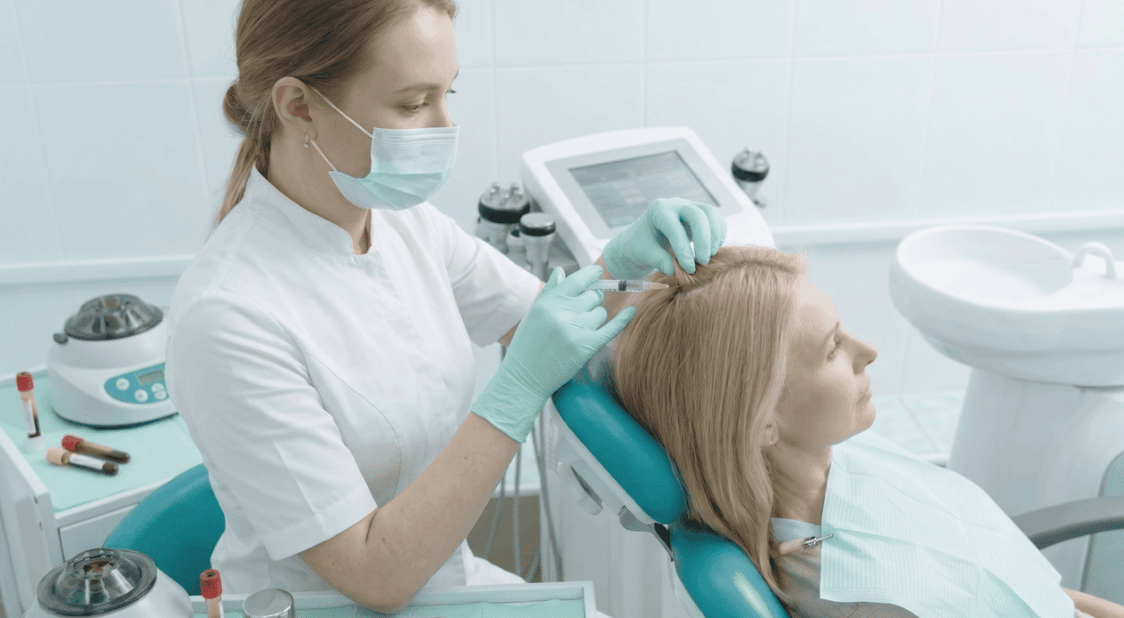
PRP platelet rich plasma hair treatment is a non surgical solution and hair loss treatment that starts with a small blood sample, which is processed to concentrate platelets before prp injections are placed into targeted areas of the scalp. The idea is that growth factors in blood plasma may use the body’s natural growth factors and healing properties to support hair follicles, stimulate hair growth, and promote tissue repair.
For early thinning due to pattern hair loss, PRP is a reasonable option to discuss. The research is encouraging but not definitive. Reviews of randomized trials suggest it is particularly relevant for early-to-moderate androgenetic alopecia, and most patients who respond may notice less shedding or other early changes after three to four weeks, with continued improvement over the following months and fuller hair growth often appearing over 3–6 months. At the same time, PRP may help encourage new hair growth and natural results, but results vary between studies, there is no single standard protocol, gains are usually modest rather than dramatic, and not everyone responds. Multiple sessions are usually needed for optimal results, followed by maintenance every 6 to 12 months.
Whether it is worth considering for you depends on several factors.
It tends to make more sense when you have confirmed pattern thinning, your follicles are still active, you are at an early or moderate stage, you have realistic expectations, you are willing to commit to a series of sessions and maintenance, want support for natural hair growth from your own plasma, have addressed any underlying medical causes, and understand that response can also vary with factors such as overall health.
It tends to make less sense when hair loss is due to an untreated medical condition, you are in a temporary shedding phase that may resolve on its own, you have scarring hair loss, hair has been absent from an area for many years, or you are looking for a guaranteed or dramatic result.
An honest specialist will help you weigh these points, and will tell you if PRP is unlikely to be your best first step.
PRP Alongside Other Options
PRP is rarely the only tool. Depending on your situation, a specialist may discuss several other approaches, either instead of PRP or alongside it, and some clinics also combine PRP with ACell to support hair restoration and scalp health, with long lasting results than PRP alone in selected cases.
Topical treatments. Minoxidil is a widely used, non-prescription topical treatment for pattern hair loss in both men and women, and it is often used alongside other therapies.
Prescription medications. Some medications are used for pattern hair loss, depending on your sex and health, and these are prescribed by a doctor after assessment.
Microneedling. This technique uses fine needles to stimulate the scalp, and it is sometimes combined with PRP or topical treatments.
Low-level light therapy. Devices that deliver red light to the scalp are used at home or in clinics for some patients.
Nutritional and lifestyle support. Correcting deficiencies, managing stress, and improving sleep and diet can support healthier hair.
Hair transplantation. For more advanced thinning, surgical options may be discussed, though they are generally considered when other treatments are not enough; regenerative options such as ACell + PRP may also be used alongside surgical techniques to support existing hair.
Studies suggest that combining PRP with other approaches may give better results than PRP alone, though research continues. In the ACell + PRP procedure, blood is drawn, processed into PRP, then mixed with ACell before being injected into the scalp. ACell is used to support tissue regeneration and may help improve blood supply to weakened follicles. It also supports the body’s ability to repair follicular tissue by working with the healing mechanisms of your own body. The right combination depends on your diagnosis, goals, and health.
Questions to Ask a Specialist About PRP
If PRP is on the table, it is sensible to ask a few direct questions. What is causing my hair loss, and how do you know? Am I a good candidate for PRP, and what stage is my thinning? What results can I realistically expect, and over what time? How many sessions will I need, how far apart, and what maintenance is required—given that the procedure usually takes about 45–60 minutes, many clinics start with multiple sessions such as 3–4 sessions spaced 4–6 weeks apart, while some protocols use 4 to 6 sessions at 2 to 4 week intervals depending on the treatment plan? How is the PRP prepared, and what protocol do you use? What are the risks and side effects? Should PRP be combined with other treatments in my case? What will the total cost be over the full course, and how will individual treatment needs and the number of sessions in my personalized treatment plan affect it? And how will we measure whether it is working?
A trustworthy specialist will answer clearly and will not promise guaranteed results.
How to Track Whether Treatment Is Working
Because hair changes gradually, it is easy to misjudge progress. A simple routine helps. Take photographs of your scalp at the start, from the same angles, in the same lighting, with hair in the same state; most patients who respond begin to notice early changes after about three to four weeks, with continued improvement over the following months. Repeat them every month or two. Your specialist may also take standardized scalp images or measurements. Compare over several months rather than week to week, since results may take several weeks to become noticeable, early changes can be subtle, and shedding can fluctuate.
This evidence also helps you and your specialist decide whether to continue, adjust, or stop treatment.
What Dubai Adds to the Picture
A few considerations are particularly relevant for people living in Dubai. Stress and demanding work schedules are common triggers for shedding. Nutritional issues such as low vitamin D or iron are frequently checked, even in a sunny climate, and can contribute to hair problems. Heat and strong sun can affect the scalp, so protection matters, and frequent heat styling or tight hairstyles can add damage. A diverse population also means different hair types and different patterns of hair loss, which makes a proper individual assessment important rather than a one-size-fits-all approach. Because dubai platelet rich plasma is widely recognized and PRP treatment is a common service across many cosmetic clinics in the city, careful assessment and provider selection matter even more.
If you are comparing PRP treatment in Dubai clinics, look for one that begins with assessment, explains the evidence honestly, and offers alternatives where appropriate.
Safety and Who Should Be Cautious
PRP therapy is generally considered a low-risk, minimally invasive, walk-in, walk-out procedure with minimal downtime because it uses your own blood, but it is still a medical procedure involving injections. Before prp injections, topical numbing cream is usually applied to the scalp to keep minimal discomfort, and most patients report only slight discomfort during treatment. Common effects include pain or swelling at the injection sites, bruising, mild headache, and short-term soreness after treatment, while infection is rare but possible. Patients are usually advised not to wash their hair or shower for at least 12 hours after treatment, and sometimes for 12–18 hours. Intense heat and strenuous exercise are typically avoided for 24 hours, and patients are also advised to stay hydrated, avoid smoking or alcohol, and limit sun exposure. Reactions are rare because the treatment uses the patient’s own blood. Certain conditions, such as blood or platelet disorders, active scalp infections, some chronic illnesses, and pregnancy or breastfeeding, can make PRP unsuitable or call for caution. Blood thinning medications should be discussed with your provider, and patients are commonly advised to avoid them for a few days before treatment unless their doctor says otherwise. This is another reason to have PRP carried out by qualified professionals after a proper health review.
What to Expect at Premium Cosmetic Laser Center
At Premium Cosmetic Laser Center, we start with a consultation and scalp assessment to understand what is happening and why. We discuss your history, examine your scalp, and where appropriate recommend tests. If PRP for hair Dubai residents ask about is suitable, we explain how the treatment works, how many sessions you may need, what results are realistic, and how our team uses advanced techniques in PRP preparation and administration. If another approach, or a combination, would serve you better, we will say so, including when high quality PRP prepared carefully from your own blood should be part of an individualized plan. For anyone considering PRP treatment in Dubai, our goal is to help you make a decision that is based on evidence and your own situation, not on pressure.
Final Thoughts
Early hair thinning is the stage at which action has the most to protect. The most valuable first step is not necessarily a treatment, but an assessment, to understand whether you are seeing pattern hair loss, temporary shedding, or something that needs medical attention. If your thinning is persistent, progressing, or worrying you, it is worth speaking with a specialist sooner rather than later.
PRP can be a reasonable option for early to moderate pattern thinning, with moderate evidence of benefit, modest expected gains, and a need for repeated sessions and maintenance. It is not a miracle, and it is not right for everyone. A frank conversation about PRP for hair Dubai specialists can offer, including your diagnosis, expectations, and alternatives, is the best way to decide. We would be glad to help you have that conversation, and to plan your next step with confidence.
Frequently Asked Questions
- Is PRP worth trying for early hair thinning?
It can be worth considering if you have confirmed early to moderate pattern hair loss and your follicles are still active, and combined regenerative approaches may help reactivate dormant follicles in selected early-stage cases. Research suggests moderate evidence that PRP can improve hair density, but results vary, gains are usually modest, and maintenance is needed. A specialist can tell you whether it suits your situation and whether other treatments should come first.
- What are the first signs of hair thinning I should not ignore?
Common early signs include a widening parting, a receding hairline or thinning temples, reduced ponytail thickness, finer and shorter hairs, more visible scalp, and increased shedding. Thinning that persists for more than a few months, or that appears suddenly or in patches, is worth discussing with a specialist.
- How do I know whether my hair loss is thinning or temporary shedding?
Pattern thinning usually involves gradual loss of density in specific areas with finer hairs, while shedding involves more hairs falling out diffusely, often after illness, stress, childbirth, rapid weight loss, or a nutritional deficiency. A scalp examination and history help a specialist distinguish between them, and sometimes both occur together.
- Do I need tests before PRP treatment?
Often it is sensible. Depending on your history, a specialist may recommend blood tests to check for iron deficiency, thyroid problems, vitamin D levels, or hormonal imbalances, since treating an underlying cause may be necessary alongside or before PRP.
- How many PRP sessions are needed for early thinning?
Protocols vary, but many plans use 4 to 6 sessions spaced 2 to 4 weeks apart, followed by maintenance sessions. PRP plans also vary, and some specialists may discuss ACell + PRP for suitable men and women with genetic thinning, receding hairlines, or thinning crowns. ACell is an FDA-approved cellular regeneration product used to promote healing and tissue repair, and in these protocols it is mixed with PRP before injection into the scalp. extracted prp is prepared from the patient’s blood before being mixed with ACell and injected into the scalp. Visible improvement usually takes a couple of months to appear and builds over about six months, and the benefit fades without maintenance. ACell + PRP is also a non surgical solution with minimal discomfort and downtime; results may begin around 4–6 months, support hair growth in the treated area by attracting stem cells, and continue improving for longer.
- How do I choose where to have PRP treatment in Dubai?
Look for a clinic where qualified professionals assess your scalp and health first, explain how the PRP is prepared and what results are realistic, discuss alternatives and combinations, and avoid guaranteeing outcomes. Pricing in Dubai varies widely, with entry offers sometimes starting around AED 299 and examples such as a AED 700 package at Emirates Hospital Day Surgery. A clinic offering PRP treatment in Dubai should be willing to tell you if it is not the right option for you.
