
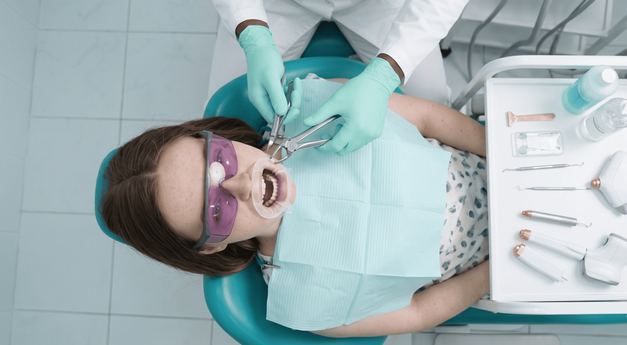
Dental fillings in Dubai are a straightforward, minimally invasive way to treat small cavities early, before decay turns into a more painful, complex, and expensive problem. If you live in Dubai and have a diagnosed cavity, suspect tooth decay, or have noticed a faint twinge, sensitivity, or a dark spot on a tooth, understanding when a filling is needed can help you protect the tooth and avoid more involved treatment later.
A small cavity rarely announces itself with urgency. There is no dramatic pain, no obvious emergency, often just a faint twinge when biting into something cold, or a tiny dark spot a dentist points out during a routine checkup that you might not have even noticed yourself. It is precisely this quiet, unremarkable presentation that leads so many people to delay treatment, reasoning that something this small can surely wait.
The honest, clinically supported answer is that it genuinely cannot, or at least not indefinitely. At Premium Cosmetic Laser Center, we see the full spectrum of what happens when a small, easily treatable cavity is caught early versus left to progress, including decay that can form beneath older fillings, and the difference in cost, complexity, and comfort between these two paths is considerably larger than most patients expect. This guide explains how cavities form and progress, the signs to watch for, why a simple filling at the right moment helps preserve your natural tooth, what can happen when treatment is delayed, and what to expect from dental care at Premium Cosmetic Laser Center.
How a Cavity Actually Forms and Progresses
Tooth decay does not appear overnight, and understanding its gradual, staged progression is exactly what makes early intervention so effective. It begins when bacteria naturally present in your mouth feed on sugars from food and drink, producing acid as a byproduct. This acid slowly erodes the tooth’s hard outer enamel layer, eventually creating a small hole, the first visible or detectable cavity. At this earliest stage, the damage remains confined to enamel, and in some genuinely early cases, before an actual hole has formed, this process can even be reversed through fluoride treatment and improved oral hygiene, a process dentists call remineralization.
Once enamel has actually broken down into a true cavity, though, decay does not stay contained. It continues spreading, moving next into the dentin layer beneath the enamel, a softer, more porous material that decay progresses through considerably faster than it did through the harder enamel above it. If left untreated at this stage, decay eventually reaches the pulp, the tooth’s inner core containing nerves and blood vessels. This is the critical turning point, since once bacteria reach this inner living tissue, infection and inflammation follow, and a straightforward filling is no longer capable of resolving the problem.
The Predictable Stages of Untreated Decay
What makes this progression so important to understand is how genuinely predictable it is. Dental professionals consistently describe the same escalating stages when a cavity is allowed to progress rather than being treated early.
Early-stage decay, confined to enamel or just reaching dentin, is treated with a simple, conservative filling, a quick, minimally invasive procedure that removes the decayed material and restores the tooth’s structure in a single appointment. Moderate decay, once it has spread further through the dentin, requires a larger filling, or sometimes a partial crown, since more of the tooth’s original structure has been compromised and needs replacing to fully restore function. Deep decay reaching the pulp requires root canal therapy, removing the now-infected inner tissue and sealing the canal, typically followed by a full dental crown to restore the tooth’s strength once its structure has been so significantly compromised. Severe, advanced infection can progress beyond what even a root canal can address, at which point extraction becomes the only remaining option, followed by a replacement solution like a dental implant or bridge to fill the resulting gap.
This is not an occasional, worst-case scenario. It is the standard, well-documented trajectory of untreated decay, and the further along this progression a cavity is allowed to advance, the more invasive, costly, and time-consuming the eventual treatment becomes.
Why a Dental Filling Procedure at the Right Moment Genuinely Interrupts This Progression
This is precisely where dental fillings Dubai patients receive during the early stages of decay do their most valuable work. A filling does not simply patch a cosmetic problem. It physically removes the decayed, bacteria-affected tissue and seals the remaining healthy tooth structure, cutting off the pathway bacteria would otherwise use to continue spreading deeper into the tooth and helping protect adjacent teeth by reducing the chance of decay spreading to nearby surfaces. Treating a cavity early, while it remains confined to enamel or the outer portion of dentin, genuinely stops that progression in its tracks, preventing the entire downstream cascade of larger fillings, crowns, root canals, and potential extraction described above.
This is not a marginal benefit. Treating decay early significantly reduces the likelihood of ever needing a root canal later, and the difference in what treatment actually looks like at each stage is considerable. An early cavity typically means one short appointment: the dentist numbs the area with local anesthesia, removes the decay with specialized tools or lasers, completes the dental filling procedure by placing the filling material in layers and hardening each layer with a light, then polishes the filling before the visit ends, with minimal recovery. Waiting until decay has reached the pulp means a root canal, involving removing infected tissue, cleaning and sealing the inner canal, and usually placing a crown afterward, a procedure that takes considerably more time, costs meaningfully more, and involves a more complex recovery than the simple filling that could have addressed the same tooth months earlier.
Why “It’s Not Bothering Me” Is Not a Reliable Signal
One of the most common, and most understandable, reasons people delay cavity treatment Dubai dentists actually recommend addressing promptly is the simple absence of pain. This is genuinely one of the more dangerous misconceptions about how cavities work, since decay frequently progresses well before it produces any noticeable discomfort at all. Cavities do not always cause symptoms in their early stages, which is exactly why regular dental check ups, rather than waiting for pain to appear, remain the most reliable way to catch decay before symptoms appear and protect both oral health and dental health while it is still small and easily treatable.
That said, a handful of signs are genuinely worth paying attention to between checkups, since they can indicate a cavity is actively progressing. Increased sensitivity to hot, cold, or sweet foods, particularly sensitivity that lingers after the food or drink itself is gone, rather than fading immediately. Pain specifically when biting down or chewing on one particular side. A visible dark spot, hole, or rough patch on the tooth’s surface that was not there before. None of these signs guarantee a cavity has reached a serious stage, but any of them genuinely warrant a prompt evaluation rather than a wait-and-see approach.
Can Decay Develop Underneath Existing Filling Materials?
It is worth addressing a related, less commonly understood scenario directly. Yes, decay can develop beneath or around an existing filling over time, as bacteria find their way in through small cracks, a worn or aging filling margin, or a previously undetected area of decay that was not fully addressed during the original treatment. This is precisely why routine checkups remain important even for teeth that already have a filling, since your dentist can monitor the condition of existing restorations, note warning signs in a previously filled tooth such as visible cracks or chips, and check whether a filling feels rough or uneven, catching this kind of recurring decay while it remains small and manageable, rather than allowing it to progress silently beneath a filling that appears, from the outside, to be doing its job perfectly well.
Why Timing Genuinely Changes the Treatment Itself, Not Just the Cost
It is worth being clear that the choice between a filling and more invasive treatment is not simply a matter of degree or personal preference. Your dentist evaluates each cavity individually based on exactly how far decay has progressed, and sometimes a tooth that initially appears to need only a filling turns out, once fully evaluated, to actually require root canal treatment, precisely because decay had already progressed further than initial visual inspection suggested. Treatment planning also includes choosing the right filling based on aesthetics, durability, and cavity size as part of restorative dentistry, and a damaged tooth may need more than a simple filling if evaluation shows the decay is deeper than expected. This underscores why professional evaluation and appropriate diagnostic imaging matter so much, since the difference between these two treatment paths is determined by the tooth’s actual condition, not by which treatment a patient might prefer to receive.
The broader point stands regardless of the specific tooth in question. Neither a filling nor a root canal is inherently the “better” treatment in isolation. The correct treatment depends entirely on the tooth’s actual condition at the time it is evaluated, which is exactly why catching decay while it remains at the filling-appropriate stage, rather than waiting until it has progressed further, gives you access to the simpler, more conservative, and more comfortable treatment option before that window closes.
What Untreated Decay Costs Beyond the Tooth Itself
Beyond the direct cost and complexity difference between a filling and a root canal, untreated decay that eventually leads to extraction carries additional consequences worth understanding. A missing tooth does not simply leave an isolated gap. Neighboring teeth can gradually shift into the empty space over time, your bite alignment can change as a result, and this shifting frequently requires additional treatment down the line to address, beyond whatever replacement option, an implant or bridge, is chosen to fill the original gap itself. In other words, the true cost of allowing a small, early cavity to progress all the way to extraction extends considerably beyond that single tooth, affecting the surrounding teeth and your bite as a whole. Preserving nearby teeth and future dental restorations also depends on good oral hygiene and managing teeth grinding, both of which can shorten their lifespan.
The Simple, Practical Takeaway
Bringing this together, the clinical reality is genuinely straightforward. A cavity, once formed, does not stay small or resolve on its own. It progresses through fairly predictable stages, from enamel, into dentin, and eventually into the tooth’s inner pulp if left unaddressed, with each stage requiring a more invasive, costly, and time-consuming treatment than the one before it. A tooth filling applied while decay remains in its earlier stages genuinely interrupts this entire progression, protecting the tooth’s pulp and preventing the more serious outcomes, root canal therapy, a crown, or ultimately extraction, that untreated decay reliably leads toward.
This is precisely why routine dental checkups, generally recommended roughly every six months, matter so much, since they remain the most reliable way to catch a cavity while it is still small, asymptomatic, and easily treated with a straightforward filling, rather than waiting for pain or visible damage to signal that decay has already progressed considerably further than it needed to.
What to Expect from Dental Fillings in Dubai at Premium Cosmetic Laser Center
At Premium Cosmetic Laser Center, our dental clinic sees every patient presenting with a suspected cavity for a thorough examination backed by the team’s clinical expertise, including digital imaging where appropriate, to accurately assess exactly how far decay has progressed and recommend the treatment genuinely suited to that specific tooth’s condition. There are several types of dental fillings in Dubai, and the right option depends on the condition of the tooth being treated. Composite fillings are usually the preferred tooth-colored choice because this composite material is used in tooth colored dental fillings made from tooth colored synthetic resins for a natural appearance and a conservative repair. Modern formulations can also include ceramic particles and are designed to tolerate moderate pressure in small to medium restorations. Clinical studies show over 90% survival rates at 10 years for composites, with annual failure rates of about 1.8%. Ceramic fillings are custom-made restorations fabricated in a dental laboratory and are virtually indistinguishable from natural teeth while offering excellent aesthetics and durability. Glass ionomer fillings release fluoride, which can help protect against further decay. Both dental amalgam and silver amalgam are older materials now used less often in modern dentistry. Our goal with every dental fillings Dubai patients receive is always the same, addressing decay as early and conservatively as possible, preserving as much of your natural tooth structure as we can, and helping you avoid the more invasive, costly treatment path that comes with delayed care. Dental filling cost can vary, but dental filling costs in Dubai typically range from AED 150 to AED 3,500 overall, with standard composite fillings often AED 150 to AED 800 per tooth, ceramic inlays and onlays around AED 800 to AED 2,000, and gold fillings around AED 1,500 to AED 3,500, with gold inlays considered a premium option that can be compatible with natural enamel and may last 15 to 30 years or longer, depending mainly on material type and cavity size.
Final Thoughts
A small cavity is genuinely never simply a cosmetic concern to address whenever convenient. Fillings are among the most common dental procedures for treating early decay before it progresses, and this earliest, most treatable stage of a progressive process, left unaddressed, moves reliably toward larger fillings, crowns, root canal therapy, and in the most advanced cases, extraction. A straightforward tooth filling applied while decay remains confined to enamel or the outer dentin genuinely interrupts this entire trajectory, protecting your tooth’s inner pulp and keeping treatment simple, affordable, and comfortable.
If you have noticed any sensitivity, a visible spot on a tooth, or it has simply been more than six months since your last dental exam, the most valuable thing you can do is schedule an evaluation now rather than waiting for a clearer signal. At Premium Cosmetic Laser Center, our team is ready to assess your specific situation and help you catch any decay while a simple filling remains the answer.
Frequently Asked Questions
- Can a small cavity heal on its own without a filling?
In the very earliest stage, before enamel has actually broken down into a true hole, some reversal is genuinely possible through fluoride treatment and improved oral hygiene, a process called remineralization. Once an actual cavity has formed, however, it will not heal on its own and will continue progressing deeper into the tooth without treatment.
- How do I know if my cavity needs a filling or something more serious like a root canal?
This depends entirely on how far decay has progressed, specifically whether it remains confined to enamel and outer dentin, which a filling can address, or has reached the tooth’s inner pulp, which requires root canal treatment instead. Only a proper dental examination, often including X-rays as part of treatment planning, can accurately determine which stage a specific cavity has reached before deciding on the appropriate restorative treatment.
- Why don’t I feel any pain if I actually have a cavity?
Cavities frequently progress without causing any noticeable symptoms in their early stages, which is exactly why routine checkups, rather than waiting for pain to appear, remain the most reliable way to catch decay early. By the time pain does develop, decay has often already progressed further than it would have if caught during a routine exam.
- Can a cavity develop again under a filling I already have?
Yes, decay can develop beneath or around an existing filling over time if bacteria find their way in through small cracks or a worn filling margin. This is one of the main reasons routine dental checkups remain important even for teeth that already have restorative work, since your dentist can catch this kind of recurring decay early. A previously filled tooth may also need attention if the damaged portion around the restoration starts leaking or decaying again.
- How much more expensive is a root canal compared to a simple filling?
While exact costs vary by clinic and case complexity, a root canal is consistently more expensive and time-consuming than a filling, since it involves considerably more extensive treatment, removing infected pulp tissue, cleaning and sealing the canal, and usually placing a crown afterward, compared to a single, straightforward filling appointment for an early-stage cavity. Composite fillings start from AED 150 at many clinics in Dubai, while the final cost depends on the case.
- How often should I get a dental checkup to catch cavities early?
Most dental professionals recommend a checkup roughly every six months, which allows your dentist to identify and address decay while it remains small, asymptomatic, and treatable with a simple, conservative tooth filling rather than waiting until symptoms develop and the cavity has already progressed further. Routine visits also help monitor tooth fillings over time and preserve oral health.
- What happens during a dental filling appointment?
Your dentist first uses a local anesthetic to numb the area, then removes the decayed or damaged portion to repair tooth cavities before placing composite resin or another filling material. A typical dental filling appointment usually takes 30 to 60 minutes.
