
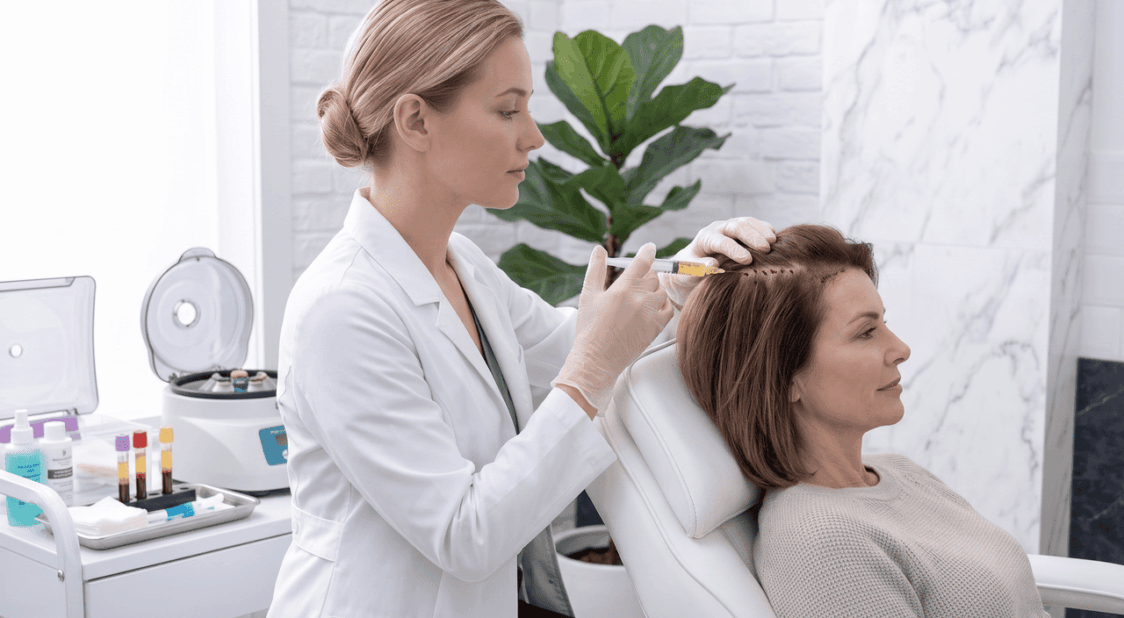
Noticing your hair thinning is rarely a comfortable experience. A wider parting, a receding hairline, more strands in the shower drain, or a scalp that seems more visible under bright light can all make you feel self-conscious, and it is natural to look for a solution that goes beyond shampoos and supplements. One treatment that comes up again and again in these searches is platelet-rich plasma, or PRP.
PRP has become one of the most talked-about options in hair restoration, and interest in PRP treatment Dubai clinics offer has grown steadily. But popularity is not the same as certainty, and patients deserve clear information before they commit. At Premium Cosmetic Laser Center, we believe a well-informed first session is a better first session. This guide explains what PRP is, how it is meant to work, who is likely to benefit, what the evidence really says, and what you should know and do before your first appointment.
How Is Platelet Rich Plasma for Hair Supposed to Work?
The idea behind PRP therapy for hair is that the growth factors in the concentrated plasma may support the hair follicles. In common forms of hair loss, follicles gradually shrink, a process known as miniaturization, and produce thinner, shorter hairs until they may stop producing visible hair altogether. Researchers believe that PRP may stimulate follicle cells, improve blood supply around the follicle, and prolong the growth phase of the hair cycle, helping thinning hairs become thicker and stay in the growing phase for longer.
It is important to understand what this means in practice. PRP is generally thought to work best on follicles that are still alive but weakened. It does not create new follicles, and it is not designed to restore hair to areas that have been completely bald for many years.
Who Is Likely to Benefit?
PRP has been studied most extensively in androgenetic alopecia, the common pattern hair loss that affects both men and women. This is the type of hair loss that causes receding hairlines and crown thinning in men, and widening partings and diffuse thinning in women, with reduced hair volume often appearing as an early sign.
The strongest case for PRP is in people with early to moderate pattern hair loss, where follicles are still active. Starting earlier, while there is still hair to work with, tends to give better prospects than waiting until the scalp is largely bare, and suitable candidates often hope for fuller-looking density and healthier hair rather than dramatic regrowth.
PRP is less likely to help, or has less supporting evidence, in some other situations. Advanced baldness with few remaining follicles is generally difficult to treat with PRP alone. Scarring forms of hair loss, where follicles have been destroyed, are not expected to respond. For alopecia areata, an autoimmune condition, current guidance suggests the evidence is not strong enough to recommend for or against PRP. And hair loss caused by an underlying medical problem needs that problem treated first, as this hair loss treatment works best once the underlying cause has been addressed.
What Does the Evidence Actually Say?
It is worth being honest here, since marketing claims around PRP sometimes run ahead of the research. The picture is encouraging but not definitive.
Several systematic reviews that combine the results of randomized trials have found that PRP can improve hair density in people with androgenetic alopecia, with benefits reported at around three and six months compared with baseline or placebo. A large review of dozens of randomized trials concluded that there is moderate evidence that PRP can improve hair density and reduce hair loss. Some studies suggest that PRP combined with other treatments, such as microneedling or minoxidil, may work better than PRP alone.
At the same time, there are important caveats. Results vary considerably between studies, largely because there is no single standard method and because different advanced techniques are used to prepare PRP. Platelet-rich plasma is processed from blood plasma to concentrate platelets before use. Preparation techniques, platelet concentrations, the use of activators, and differences in how many treatments are given and how far apart they are all vary, with multiple sessions often needed for optimal results. Some reviews have found that PRP improved density but did not clearly improve hair thickness compared with placebo. Gains are generally modest rather than dramatic, and not everyone responds. PRP is also not a one-time fix, since effects tend to fade without maintenance.
In short, PRP appears to be a reasonable option for suitable candidates with realistic expectations; it is widely recognized as a minimally invasive option, but outcomes still depend on protocol and patient selection, and it is not a guaranteed cure, so anyone who promises dramatic regrowth should be treated with caution.
Step One Before Your First Session: Find Out Why Your Hair Follicles Are Experiencing Hair Loss
The most valuable thing you can do before booking PRP treatment Dubai clinics provide is to understand the cause of your hair loss. Many different conditions can cause thinning, and they are not all treated the same way.
Common causes include pattern hair loss related to genetics and hormones, stress-related shedding, nutritional deficiencies such as low iron or vitamin D, thyroid problems, hormonal changes after pregnancy or during menopause, certain medications, scalp conditions, and autoimmune conditions. Treating the wrong problem wastes time and money, and treating a cosmetic symptom while ignoring an underlying medical condition can allow it to worsen.
A proper assessment by a dermatologist, which may include a scalp examination and, where appropriate, blood tests, can identify the cause. This also helps determine whether PRP is likely to suit you, or whether another treatment should come first or be combined with it.
Step Two: Review Your Health and Medications
PRP uses your own blood, so your general health matters. Before treatment, your provider should ask about your medical history and current medications. Certain conditions can make PRP unsuitable or call for caution, including blood disorders or low platelet counts, some chronic illnesses, active infections of the scalp, certain cancers, and pregnancy or breastfeeding, where treatment is generally avoided.
Medications and supplements that affect bleeding or platelet function, such as blood thinners, aspirin, and some anti-inflammatory drugs, can influence the treatment. You may be advised to avoid blood thinning medications for a few days before PRP treatment, unless your prescribing doctor advises otherwise. Do not stop any prescribed medication on your own. Instead, discuss them with your provider, who can advise whether any adjustment is appropriate, in consultation with your doctor where necessary.
Step Three: Know What the Procedure Involves
Understanding the process helps reduce anxiety. PRP injections in a typical PRP hair treatment Dubai session follow these steps.
First, your scalp is assessed and the treatment areas are planned. A blood sample is taken from your arm first, much like a routine blood test. The blood is processed in a centrifuge to concentrate the platelets and produce extracted PRP, which usually takes a short time. The way it is prepared can also affect whether the clinic produces high quality PRP. The scalp may be cleaned, and topical numbing cream or local anesthetic may be applied for comfort, depending on the clinic and your preference, to keep the procedure associated with minimal discomfort. The PRP is then injected into the scalp at multiple points across the areas of thinning, using fine needles. Some clinics combine this with microneedling, which uses tiny needles to create micro-channels in the scalp.
The whole visit commonly takes around an hour, though it varies. Most people describe the injections as uncomfortable but tolerable, with sensations of pressure, pricking, or brief stinging. You can usually return to normal activities the same day, and the procedure is generally regarded as a safe, effective walk-in, walk-out treatment with minimal downtime.
Step Four: Understand the Treatment Plan and Timeline
PRP is rarely a one-off treatment. Protocols vary between clinics, but a common approach involves a series of sessions, often around three or four, spaced several weeks apart, followed by maintenance sessions at longer intervals. Your provider should explain the schedule that suits your situation.
Results take time. Hair grows slowly, and while some early changes may appear after three to four weeks, fuller visible improvement often takes a couple of months or longer. Many people see early improvement in shedding and the quality of existing hair within a few months, which can support natural hair growth and, over time, possible new hair growth, with density improvements building over about six months. Some people notice increased shedding shortly after treatment, which can occur as weaker hairs make way for new growth, and this is usually temporary, though you should mention it to your provider.
Because the effects are not permanent, most patients need maintenance sessions to sustain the benefit, and the frequency should be discussed with your provider. Setting realistic expectations about the need for ongoing treatment is an important part of deciding whether PRP is right for you.
When ACell is part of the plan, it is used to support the body’s ability to repair tissue and promote healing through tissue regeneration around weakened follicles.
ACell + PRP may also be used alongside surgical hair restoration to support surrounding non-transplanted hair; most patients who respond start noticing improvement after four to six months, with benefits that can continue for up to 15 months.
Step Five: Prepare for Your Session
A few simple steps can help your first session go smoothly. Eat a normal meal beforehand and stay well hydrated, since good hydration can make the blood draw easier. Avoid alcohol and smoking in the period around your session if your provider advises it, as both can affect healing and blood quality. Wash your hair as usual, and avoid applying styling products, oils, or heavy treatments on the day. Follow any instructions about medications, and do not stop a prescribed drug without medical guidance. Wear comfortable clothing, and plan for a relaxed day afterward.
If you are nervous about needles or the procedure, tell your provider, who can help you feel comfortable.
What to Expect After the Session
Some mild effects are common and usually settle quickly. These include tenderness, redness, swelling, or a feeling of tightness in the scalp, minor bleeding or bruising at injection sites, and occasionally a mild headache. Serious complications are uncommon, but infection and other problems can occur, so it is important to follow aftercare instructions and contact your clinic if you notice anything unusual such as increasing pain, spreading redness, fever, or discharge.
Aftercare advice varies, but common guidance includes avoiding vigorous exercise, saunas, and swimming for a short period, protecting the scalp from the sun, being gentle with your hair, and following your clinic’s instructions on when to wash your hair and resume styling products. Dubai’s strong sun makes scalp protection particularly important, so wear a hat when outdoors for the first days.
Can PRP Be Combined With Other Treatments?
Yes, and combination approaches are common in hair loss management, with PRP often used as a non surgical solution alongside other hair-loss treatments. Studies have explored PRP together with microneedling, topical minoxidil, and low-level light therapy, and some suggest these plans can stimulate hair growth more effectively than PRP alone in some patients. Doctors may also prescribe medications for pattern hair loss, depending on your situation and sex. Nutritional support and treating underlying conditions, such as iron deficiency or thyroid problems, can also be an important part of the plan, and some combined strategies are used to reduce hair fall while supporting the overall response.
A good provider will discuss the overall picture, not just PRP in isolation, and will recommend the combination that suits your needs and health.
Questions to Ask Before You Book
Since there is no single standard protocol, it is sensible to ask questions. How do you determine whether I am a good candidate? What is the likely cause of my hair loss? How is the PRP prepared, and is it activated? How many sessions will I need, and how far apart? What results can I realistically expect, and over what period? What are the possible side effects? How much will the full plan cost, including maintenance? And who will perform the treatment, and what are their qualifications?
A trustworthy clinic will answer clearly, without exaggeration, and will be willing to say when PRP is not the right choice.
Red Flags to Watch For
Be cautious of any provider who guarantees results, promises to regrow a full head of hair, offers treatment without examining your scalp or asking about your health, rushes you into buying a large package, or cannot explain how the PRP is prepared. A responsible provider recognizes that responses vary and that PRP is not suitable for everyone.
Choosing Where to Have Treatment
PRP is a medical procedure involving blood and injections, so for any PRP treatment Dubai clinic you consider, the setting and the practitioner matter. Look for a licensed clinic with qualified medical professionals, clean and well-run facilities, a clear explanation of the process, and a willingness to discuss alternatives. Anyone considering PRP for hair should feel that the clinic is primarily interested in whether the treatment is right for them, not simply in booking sessions.
What to Expect at Premium Cosmetic Laser Center
At Premium Cosmetic Laser Center, we begin with a consultation and scalp assessment to understand the pattern and likely cause of your hair loss, then create a personalized treatment plan. We explain whether PRP treatment Dubai patients commonly choose is likely to suit you, discuss realistic outcomes and the number of sessions you may need, and review your medical history and medications. The goal is to support hair growth, existing hair quality, and overall scalp health with an individualized plan. If PRP is appropriate, we explain each step, and we are open about what the treatment can and cannot do. If another approach would serve you better, we will say so, because our priority is helping you make a sound decision.
Final Thoughts
PRP for hair is a promising, minimally invasive option for people with early to moderate pattern hair loss, and the research supports modest improvements in hair density for suitable candidates. It is not a miracle, it does not work for everyone, and it usually requires a series of sessions and ongoing maintenance. The best results come from starting early, understanding the cause of your hair loss, having realistic expectations, and choosing a provider who is honest and thorough.
If you are considering PRP, the most useful first step is a proper consultation. A conversation about PRP treatment Dubai residents can trust will help you understand whether the treatment suits you, what to expect, and how to prepare. We would be glad to help you take that step with confidence.
Frequently Asked Questions
- Does PRP for hair loss really work?
Research suggests that PRP can improve hair density in many people with early to moderate androgenetic alopecia, and reviews of randomized trials describe moderate evidence of benefit. Results vary between individuals and between studies, gains are usually modest, and it is not a cure. It tends to work best on follicles that are weakened but still active.
- How many PRP sessions will I need, and how long until I see results?
Protocols vary, but a common approach involves a series of around three or four sessions spaced several weeks apart, followed by maintenance sessions. Some people notice early changes after three to four weeks, but visible improvement usually develops over the following months, with most patients seeing clearer progress by around four to six months. Because the effect is not permanent, maintenance is generally needed to sustain results.
- Is PRP treatment painful, and is there downtime?
Most people describe prp injections as uncomfortable but tolerable, and topical numbing cream can be used to help keep treatment associated with minimal discomfort for most patients. Mild tenderness, redness, swelling, or bruising may occur, and most people return to normal activities the same day. Your provider will give specific aftercare instructions.
- Who should not have PRP?
PRP may be unsuitable for people with blood or platelet disorders, active scalp infections, certain cancers or chronic illnesses, and during pregnancy or breastfeeding. It is also unlikely to help in scarring forms of hair loss or in areas that have been completely bald for a long time. A medical consultation will determine whether it is appropriate for you.
- Can I combine PRP with other hair loss treatments?
Yes, many people do. PRP is often combined with microneedling, topical minoxidil, or other therapies, and some studies suggest combinations may work better than PRP alone. In ACell + PRP treatment, blood is drawn, processed into PRP, then mixed with ACell before injection into the scalp. ACell helps attract stem cells to the treated area, which supports new cell growth and helps restore structural integrity. This approach may promote tissue repair and support new hair growth over time. Your doctor can recommend an overall plan, including treating any underlying causes such as nutritional deficiencies or thyroid problems.
- How do I find reliable PRP treatment in Dubai?
Look for a licensed clinic with qualified medical professionals that assesses your scalp and health first, explains how the PRP is prepared and how many sessions you will need, gives realistic expectations, and discusses alternatives. You may come across names such as Medcare, Emirates Hospital, iCARE, Kaya Skin Clinic, or My London Skin Clinic, but proper assessment and qualified medical care should matter more than marketing. Be cautious of guarantees of dramatic regrowth or pressure to buy a large package without a proper assessment.
